
Last updated on June 26th, 2026
🐂✨ Bullfighting Experiences in Seville — Culture, Maestranza, Dehesa and Tradition
📲 Book your Bullfighting Culture Experience in Seville
Private cultural tours, Maestranza visits, torero routes, dehesa experiences, tavern itineraries and tailor-made introductions to bullfighting culture in Seville.
✉️ info@visitarsevilla.com
💬 Direct WhatsApp
📱 Instagram of VisitarSevilla.com
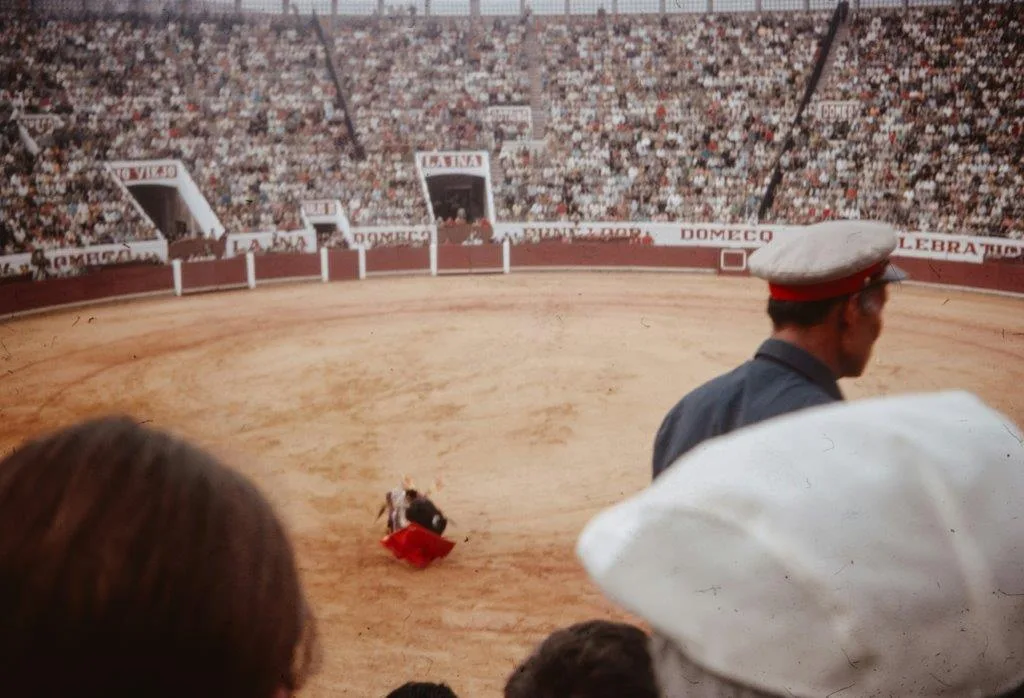
💡 Our philosophy: To understand bullfighting does not mean that you must agree with it. It means discovering its history, its language, its rituals, its countryside, its art, its gastronomy and the reasons why it continues to provoke fascination, rejection, emotion and debate.
🌟 Why Seville is essential for bullfighting culture
🐂 A city where tauromaquia is still felt intensely
💎 Private bullfighting culture experiences
For travellers who want a more personal and serious introduction, we design private bullfighting culture tours in Seville. These experiences can be adapted to your level of knowledge, curiosity and sensitivity.
Some guests are passionate aficionados. Others arrive with doubts or even criticism. Many simply want to understand why this tradition has been so important in Spanish culture, why it continues to exist, and why it has inspired artists, writers, musicians and travellers for centuries.
❤️ My insight: Bullfighting cannot be explained properly with a slogan. It requires context: the bull, the countryside, the arena, the ritual, the art, the ethics, the controversy and the emotional world that surrounds it.
🏟️ Maestranza Bullring and museum: the essential starting point.
🌉 Triana taurine route: stories of toreros, taverns, popular devotion and local identity.
🎭 Ritual and symbolism: understanding the structure of the bullfight and its codes.
🌳 Fighting bull farms: dehesa, livestock, rural culture and the life of the bull.
🎶 Carmen, opera and flamenco: bullfighting as part of Seville’s artistic imagination.
🍴 Tavern and gastronomy extension: local atmosphere and traditional dishes.
🛒 Recommended bookable experiences
If you prefer an easy online reservation, these external experiences are useful options for visitors who want to book directly.
🎟️ Maestranza Bullring Guided Tour
A guided visit to one of Spain’s most famous bullrings, with historical explanations and access to the bullfighting museum.
💬 Guided Tour with a Famous Bullfighter
A unique experience for those who want to hear personal stories, rituals and behind-the-scenes insights directly from a professional bullfighter.
🌳 Fighting Bull Farm Visit from Seville
A countryside experience to understand how fighting bulls are raised in the Andalusian dehesa, with transport included in the bookable option.
🏟️ The Maestranza Bullring: the heart of taurine Seville
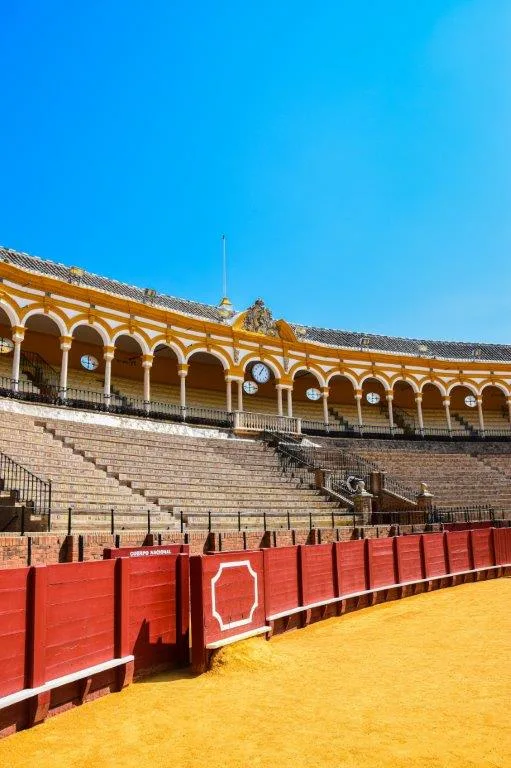
The Plaza de Toros de la Real Maestranza de Caballería de Sevilla is one of the oldest and most prestigious monuments in the bullfighting world. For many aficionados, it is a true temple of tauromaquia.
A visit to the Maestranza allows you to explore the arena, the tendidos, the architectural spaces connected with the ritual and the bullfighting museum. It is the essential place to understand why Seville occupies such a central position in the history of the corrida de toros.
This is not only a building. It is a symbolic space connected with spring, the Feria de Abril, social life, local journalism, literature, music and the mythology of famous toreros.
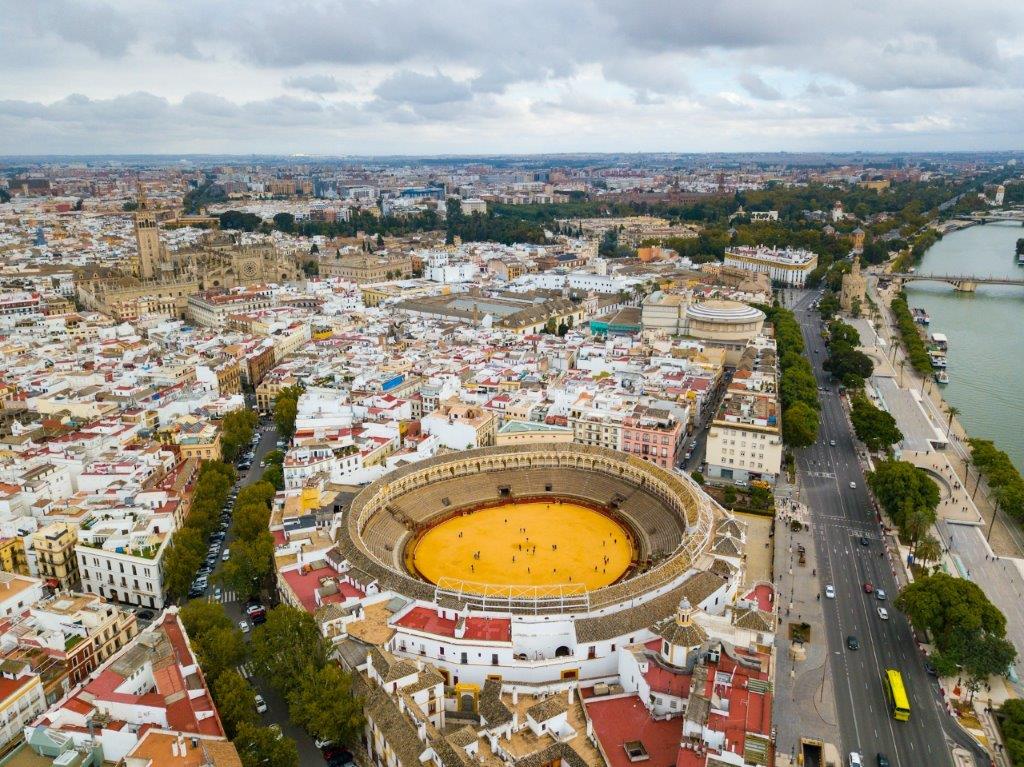
🏟️ Cultural key: The Maestranza is often called one of the great cathedrals of bullfighting. Whether one approaches it with admiration, curiosity or criticism, it is impossible to understand Seville’s taurine identity without it.

🖼️ The Bullfighting Museum
Inside the bullring, the Bullfighting Museum is an indispensable space for understanding the evolution of tauromaquia.
Here visitors can admire trajes de luces, capes, historical posters, paintings, photographs and objects connected with the most famous toreros who have passed through the Maestranza.
The museum helps visitors understand that bullfighting is not only a public event but also a visual culture: colours, fabrics, embroidery, iconography, advertising, portraiture, sculpture and memory.

🚶♂️ Toreros’ routes in Seville
A private torero route allows you to follow the footsteps of some of the most famous bullfighters connected with Seville.
Depending on the itinerary, we can include houses, monuments, taverns, plaques, streets and places where the memory of bullfighting remains alive. These routes are especially interesting in Triana and around the Maestranza, but they can also be adapted to the figures and stories that interest you most.
You will discover legends, friendships, rivalries, rituals before the bullfight, devotional practices and the way bullfighters became part of local memory.
❤️ My insight: A torero route is not only about famous names. It is also about the social world around them: cafés, taverns, families, neighbourhoods, journalists, artists and aficionados.
Only private groups. Please consult us via Email or WhatsApp.
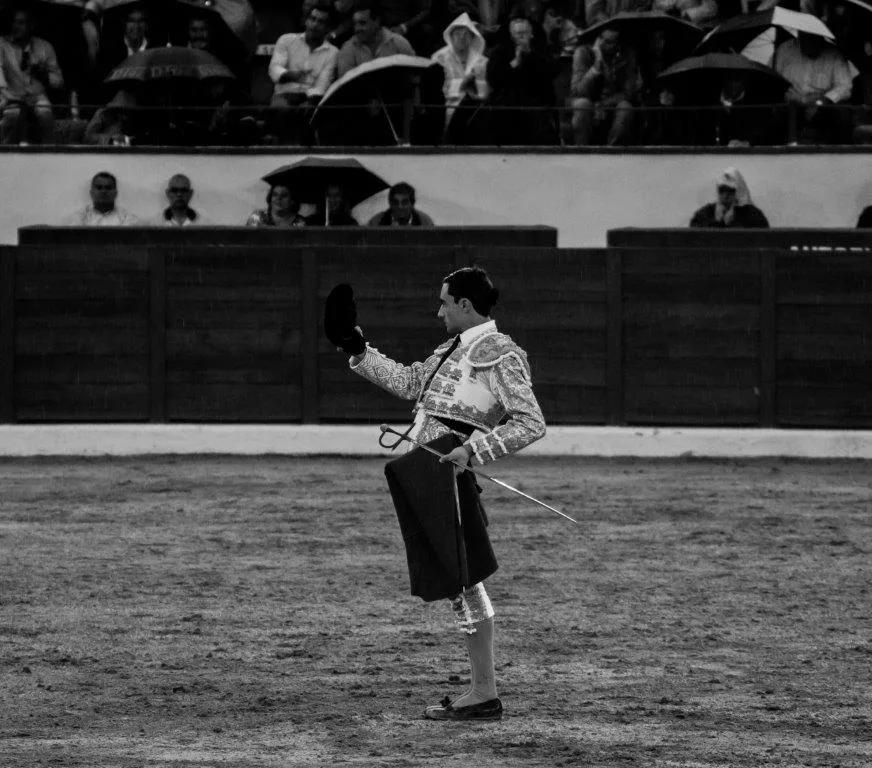
🎭 Toreo classes for amateurs
For visitors who want a more interactive and unusual experience, it is possible to arrange introductory toreo classes for amateurs.
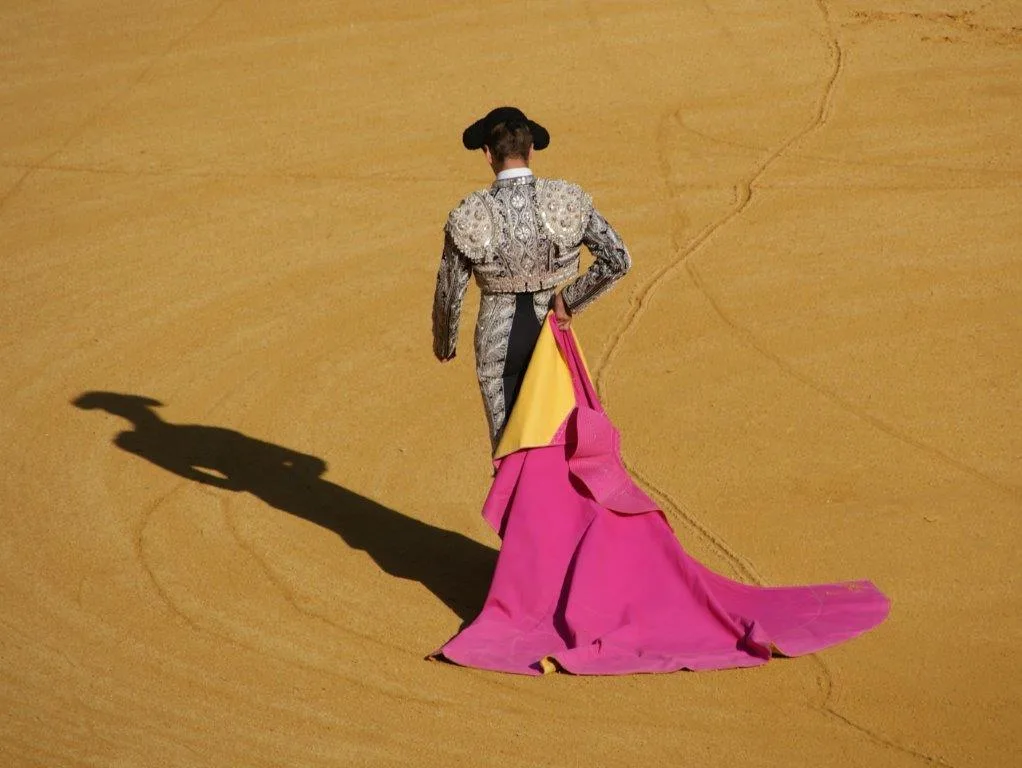
These are not violent experiences and do not involve fighting a bull. They are cultural and technical introductions where participants learn basic posture, the handling of the capote or muleta, the position of the body and the aesthetic logic of movement.
Under the guidance of experienced professionals, visitors can better understand why bullfighting is considered by aficionados to be an art of rhythm, timing, risk, control and expression.
🎭 Basic technique: posture, movement and use of the cape.
🧑🏫 Professional guidance: adapted to beginners and curious visitors.
📚 Cultural explanation: symbolism, rhythm and aesthetic principles.
👥 Private format: ideal for groups, incentives and special-interest travellers.
Only private groups. Please consult us via Email or WhatsApp.
🌳 Guided visit to a fighting bull farm
To understand tauromaquia properly, you must leave the city and enter the Andalusian countryside.
The fighting bull belongs to the world of the dehesa: open pastures, oak trees, horses, livestock breeding, selection, rural knowledge and family traditions. A visit to a fighting bull farm helps visitors understand how these animals are raised and why the countryside is so important in the culture of bullfighting.
During this type of experience, you can learn about the selection process, the natural environment, the work of the breeders and the relationship between the animal, the land and the tradition.
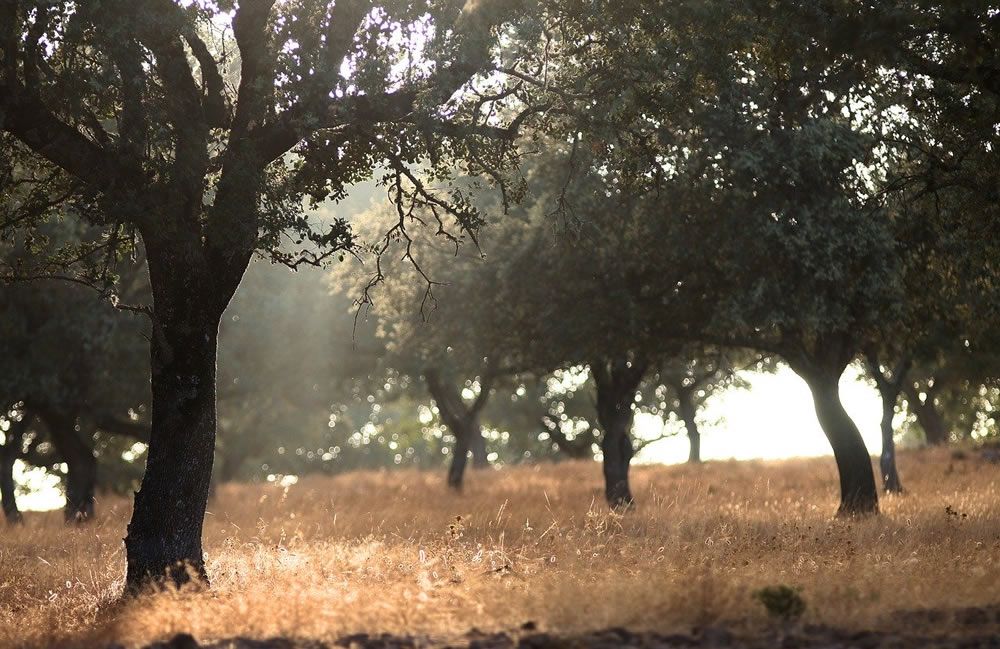
🌳 Local feeling: Many visitors only know bullfighting through the arena. The dehesa reveals a completely different dimension: landscape, livestock, ecology, silence, tradition and rural Andalusia.
For scheduled guided visits with transport, you can book here:
👉 Book a fighting bull farm visit from Seville
For private groups, we can also organize transport and tailor-made countryside experiences. Please contact us via Email or WhatsApp.
🎶 Carmen, opera, flamenco and bullfighting imagery
Many visitors arrive in Seville with images from Bizet’s Carmen: passion, jealousy, tobacco factories, soldiers, gypsies, taverns and the bullfighter Escamillo.
Although the opera is a foreign artistic creation, it has shaped the international imagination of Seville for generations. Bullfighting, flamenco and the city’s popular culture appear intertwined in this romantic and dramatic vision.
A cultural tour can connect the world of tauromaquia with opera, flamenco, literature and visual arts, helping visitors understand how Seville became one of Europe’s great symbolic cities.
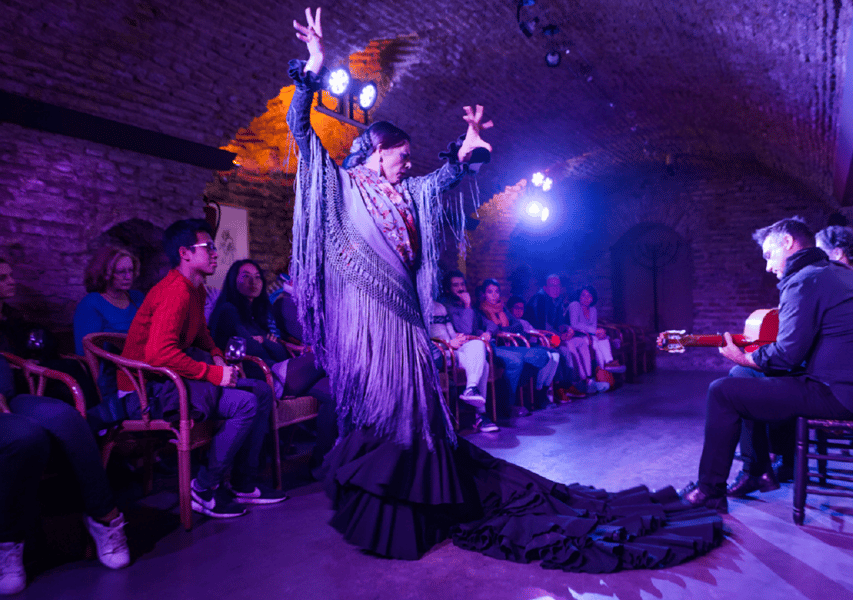
💃 Flamenco and tauromaquia
Flamenco and tauromaquia have inspired each other for generations. They share concepts such as rhythm, tension, elegance, silence, gesture, improvisation and emotional truth.
Many flamenco artists have been aficionados, and many bullfighters have admired flamenco deeply. Both worlds belong to a broader Andalusian culture where performance, courage, beauty and emotion are central.
If you want to complement your taurine experience with flamenco, we recommend seeing one of the best flamenco shows in Seville.

🍴 Gastronomy and tauromaquia
Bullfighting culture in Seville is also present in taverns, restaurants, ceramic tiles, old posters, framed photographs, conversations and traditional recipes.
One of the most famous dishes connected with this atmosphere is rabo de toro, oxtail stew, a rich and deeply Andalusian dish often associated with taurine gastronomy.
A tavern stop can be a perfect ending to the tour. It allows visitors to understand that tauromaquia is not only an event in the arena, but also a social culture preserved through food, memory and conversation.
🍷 My recommendation: If you want the experience to feel complete, finish in a traditional tavern. Bullfighting culture is often understood better through a slow conversation, a glass of wine and the images on the walls.
Tapas and tauromaquia gastronomy tours. Please consult us via Email or WhatsApp.

🫶 Who these bullfighting experiences are for
🐂 Bullfighting enthusiasts: visitors who want insider context in one of the world capitals of tauromaquia.
🔍 Curious travellers: people who want to understand without necessarily taking sides.
⚖️ Critical visitors: those who question the tradition but prefer a serious explanation instead of clichés.
🎓 Students and cultural travellers: ideal for history, anthropology, art, literature and Spanish culture.
🎶 Opera and flamenco lovers: visitors interested in Carmen, music, dance and Andalusian imagery.
🍷 Gastronomy lovers: travellers who want to connect taverns, local dishes and cultural atmosphere.
✅ What can be included
- 🏟️ Private cultural introduction to the Maestranza Bullring.
- 🖼️ Interpretation of the Bullfighting Museum, depending on access and availability.
- 🌉 Optional Triana taurine route.
- 🎭 Explanation of rituals, structure, symbolism and vocabulary.
- 🚶♂️ Toreros’ route through significant places in Seville.
- 🎓 Toreo class for amateurs, on request and subject to availability.
- 🌳 Fighting bull farm visit near Seville.
- 🎶 Connection with flamenco, opera and Carmen.
- 🍷 Tavern and gastronomy extension.
- 🗣️ English, Spanish, Italian or French, depending on availability.
❌ Not included
- 🎟️ Bullring, museum or farm tickets unless specifically arranged.
- 🚕 Transport unless requested.
- 🍽️ Food and drinks.
- 🔑 Special access unless confirmed in advance.
- 📸 Photographer or video service.
- 🐂 Attendance at a bullfight unless separately arranged.
🧾 Practical notes
⏱️ Duration: from 1.5–2 hours for a basic introduction to half-day or full-day experiences.
📍 Main locations: Maestranza Bullring, museum, Triana, taverns and surroundings.
🌳 Farm visits: require more time and usually include transport.
👥 Format: private groups, tailor-made tours and selected bookable activities.
🗣️ Languages: English, Spanish, Italian and French, depending on availability.
⚖️ Tone: cultural, serious, balanced and adapted to your sensitivity and interests.
⭐ Why book your bullfighting experience with VisitarSevilla.com?
🐂 Inside perspective: Ignacio is an aficionado and knows the cultural codes of this world.
🤝 Local contacts: guides, aficionados, specialists, taverns and people connected with tauromaquia.
⚖️ Balanced approach: we explain without imposing an opinion.
🎓 Strong E-E-A-T: real local knowledge, cultural context and practical experience designing private tours.
📍 Tailor-made routes: Maestranza, Triana, dehesa, Carmen, flamenco, taverns or gastronomy.
❤️ Human tone: we treat the subject with seriousness, respect and nuance.
📖❓ FAQs — Bullfighting Experiences in Seville
Is this only for people who like bullfighting? ▼
No. These experiences are designed for enthusiasts, curious visitors and also people who are critical but want to understand the tradition with context.
Can I visit the Maestranza Bullring? ▼
Yes, depending on opening hours, tickets and availability. It is the essential place for understanding bullfighting in Seville.
Can the tour include a fighting bull farm? ▼
Yes. Farm visits are excellent for understanding the dehesa, the countryside and the breeding of fighting bulls. They usually require transport and more time.
Do toreo classes involve animals? ▼
Introductory classes for amateurs are usually technical and cultural sessions focused on movement, posture and cape handling. They do not need to involve fighting an animal.
Can you arrange a tavern or gastronomy experience? ▼
Yes. We can include traditional taverns, taurine atmosphere and dishes such as rabo de toro, depending on the time and group preferences.
How can I book a private experience? ▼
Email us at info@visitarsevilla.com or contact us directly by WhatsApp at +34 646 15 68 14.


Leave a comment