

Last updated on July 30th, 2026
🌴 María Luisa Park in Seville: Private Tours, Family Visits and Romantic Experiences
🌴 Private tours, family visits and romantic experiences:
✉️ Email
💬 Contact me

🌿 How to discover María Luisa Park – Ignacio’s recommendations
👋 My favourite option is a private guided walk combining the park with Plaza de España and Plaza de América. It is a beautiful route through gardens, fountains, regionalist architecture, literature and the history of the Ibero-American Exhibition of 1929.
🔐 Private cultural tour:
💬 Contact me
👨👩👧👦 Travelling with children? We can create a family route with ducks, fountains, ceramic animals, legends, literary characters and visual games.
🐴 Prefer a more relaxed experience? The tour can also be organised by horse-drawn carriage, with cultural explanations and selected stops.
💍 Looking for a romantic setting? María Luisa Park contains some of the most beautiful places in Seville for proposals, couple photographs, wedding experiences and private surprises.
🍷 After the visit, I recommend continuing to Calle Felipe II, where you will find good local bars and an excellent atmosphere for tapas.
📍 María Luisa Park: key information
🌟 Why visit María Luisa Park?
María Luisa Park is much more than a pleasant place to escape the heat.
It is one of Seville’s great cultural landscapes: a carefully designed garden filled with monuments, fountains, literature, royal history and architecture associated with the Ibero-American Exhibition of 1929.
Every path seems to reveal a new corner: a ceramic fountain, a monument to a poet, an island, a pergola, a hidden bench or a small hill with a waterfall.

The park is especially rewarding because it can be enjoyed at different levels. Children see ducks, pigeons, ponds and secret pathways. Art lovers discover sculpture and ceramic decoration. Architecture enthusiasts find the legacy of 1929, while couples discover some of the most romantic settings in Seville.
❤️ My view: María Luisa Park should not be crossed quickly on the way to Plaza de España. Its real beauty lies in leaving the principal avenue and discovering its smaller gardens, literary monuments, fountains and almost secret corners.
📜 From royal garden to public park
The origins of María Luisa Park are linked to the private gardens of the Palace of San Telmo.
The Dukes of Montpensier settled in Seville during the nineteenth century and transformed the palace and its surrounding estates into an important royal residence.
In 1893, Infanta María Luisa Fernanda de Borbón donated a large part of the gardens to the city.
The park that carries her name was later redesigned by the French landscape architect Jean-Claude Nicolas Forestier, who combined French planning with Andalusian garden traditions.

Forestier created a landscape of fountains, ceramics, hedges, shaded avenues, water and intimate garden rooms.
The result is not a wild natural park but a carefully composed cultural garden designed to produce surprise, shade and beauty.
👑 Three women in the history of the park
The history of María Luisa Park can be told through several important women connected with the Spanish royal family and nineteenth-century Seville.
👑 Queen Isabel II: mother of Infanta María Luisa Fernanda and a central figure in nineteenth-century Spanish history.
🌿 Infanta María Luisa: donated the historic gardens to the city and gave the park its name.
🌹 María de las Mercedes: granddaughter of the Dukes of Montpensier and one of the most romantic royal figures associated with Seville.
Their stories connect the park with the Palace of San Telmo, the royal court, romantic love and the political history of nineteenth-century Spain.
🏛️ The Ibero-American Exhibition of 1929
The park underwent a major transformation in preparation for the Ibero-American Exhibition of 1929.
The exhibition aimed to strengthen cultural and economic ties between Spain, Portugal, the Americas and other participating territories.

New pavilions, avenues, plazas and monumental buildings appeared around and within the park.
Plaza de España became the great symbolic centre of the exhibition, while Plaza de América displayed different historical architectural styles through its three principal pavilions.
A specialist tour reveals how the park became a carefully planned stage for modern Seville and its international ambitions.
✏️ Aníbal González: the “Sevillian Gaudí”
Aníbal González is the essential architect for understanding the monumental landscape surrounding María Luisa Park.
He is sometimes popularly described as the “Sevillian Gaudí” because of his creative personality, his close association with the identity of his city and his ability to transform architecture into a recognisable local language.
The comparison is useful as an introduction, although both architects developed very different styles.
Aníbal González became the principal creator of Sevillian regionalism, combining brick, ceramics, Renaissance forms, Mudéjar references and carefully selected elements from Spain’s architectural past.

His work around María Luisa Park allows visitors to understand how Seville created a new monumental image for the twentieth century without abandoning its historical identity.
✏️ A key to the visit: do not look only at the size of the buildings. Pay attention to the brick, ironwork, ceramics, carved details and the way each structure was designed to evoke a different moment in Spanish history.
🇪🇸 Plaza de España
Plaza de España is the most famous monument associated with María Luisa Park and the Ibero-American Exhibition.

Designed by Aníbal González, it combines a vast semicircular building, towers, bridges, a navigable canal and ceramic benches representing the provinces of Spain.
Its architecture creates a theatrical embrace facing the park and symbolically opening towards the countries connected with the exhibition.
A guided visit can explain the historic scenes represented on the benches, the symbolism of the layout and the participation of ceramic workshops, craftsmen and sculptors.
🏛️ Plaza de América
Plaza de América is one of the most elegant and complete spaces within the park.

It is popularly known as the Plaza de las Palomas because of the large number of pigeons that traditionally gather there.
The square is organised around gardens, fountains and three buildings designed in different historic styles.
🏺 Archaeological Museum pavilion
The former Fine Arts Pavilion was designed in a Plateresque and Renaissance-inspired style.
Its decorated entrance, sculptures and monumental façade make it one of the principal architectural works of the exhibition complex.
🧱 Mudéjar Pavilion
The Mudéjar Pavilion combines brick, arches, ceramic decoration and references to medieval Andalusian architecture.

Today, it houses the Museum of Popular Arts and Traditions of Seville.
👑 Royal Pavilion
The Royal Pavilion was designed with Gothic and Elizabethan references and a Greek-cross plan.

Together, the three pavilions created a lesson in Spanish architectural history for visitors to the 1929 Exhibition.
👨👩👧👦 María Luisa Park with children
María Luisa Park is one of the best places in central Seville for families.
It provides open space, shade, animals, fountains and short discoveries that can maintain children’s interest without requiring a conventional monument visit.

🦆 Duck pond: one of the most popular corners for younger visitors.
⛲ Fountains: look for frogs, lions and unusual ceramic decoration.
🕊️ Plaza de América: an entertaining and spacious area traditionally associated with pigeons.
⛰️ Mount Gurugú: climb the steps and discover the small waterfall.
📖 Stories and legends: poets, princesses, bullfighters and romantic characters.
🚲 Active options: explore parts of the park by bicycle or pedal cart.
Our family guides adapt the explanation to the children’s ages, using short stories, visual challenges and opportunities to move between different spaces.
👨👩👧👦 Would you like a private family tour?
Tell us your date, number of adults and children, their ages and the preferred language. We will create an entertaining route through gardens, monuments, animals and legends.
📖 A park filled with characters and stories
One of the most distinctive features of María Luisa Park is the number of writers, artists, musicians and historical personalities represented in its roundabouts and monuments.
These spaces transform a walk through the gardens into a journey through the cultural memory of Seville.
🌹 Bécquer’s Roundabout
The Glorieta de Bécquer is one of the most romantic and recognisable places in the park.

The monument is arranged around a great cypress tree and includes a bust of the Sevillian poet Gustavo Adolfo Bécquer.
Three female figures represent different moments or emotional states of love, while bronze figures evoke wounded love and youthful passion.

Visitors sometimes leave poems, notes or flowers in this intimate space.
🌹 Romantic recommendation: Bécquer’s Roundabout is one of the most beautiful settings for a quiet proposal, anniversary surprise or symbolic moment during a private couple’s tour.
📚 Dante and the Álvarez Quintero brothers
The park includes a roundabout dedicated to Dante Alighieri, one of the essential authors of European literature.

Nearby, the Álvarez Quintero brothers are remembered as important Sevillian playwrights associated with popular comedy and the theatrical image of Andalusia.

These monuments allow a guide to introduce literature, popular theatre and the way Seville has represented itself through stories and characters.
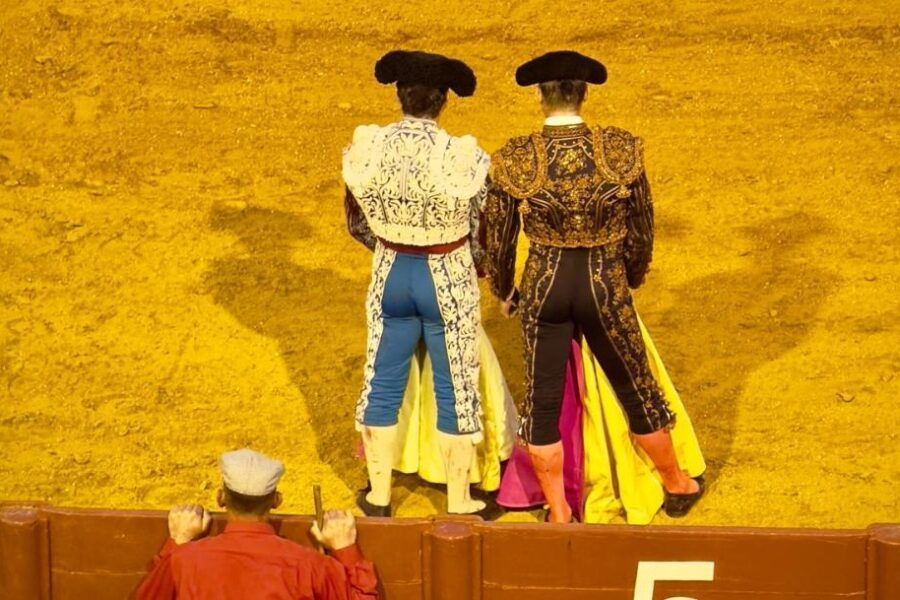
🐂 The Bullfighters’ Roundabout
The Glorieta de los Toreros was created in connection with the Ibero-American Exhibition.
Its ceramic benches represent bullfighters and popular Andalusian figures, combining decorative art with local customs.
The space provides a good opportunity to explain the relationship between regionalist architecture, ceramics and the cultural image of Andalusia in 1929.
🎨 García Ramos and Sevillian costumbrismo
The monument dedicated to the painter José García Ramos celebrates one of the leading artists of Sevillian costumbrismo.

His paintings captured popular festivities, social gatherings, traditional dress and everyday scenes in Seville.
The monument is especially interesting when combined with a visit to the Museum of Fine Arts, where nineteenth-century Andalusian painting can be explored in greater depth.
🎼 Ofelia Nieto’s Roundabout
The park also remembers the soprano Ofelia Nieto, an important Spanish opera singer of the first half of the twentieth century.


Her monument adds music and opera to the many cultural themes represented throughout the park.
✍️ Mas y Prats and the Machado brothers
The park contains monuments associated with writers who participated in the cultural life of Seville.

Mas y Prats was a Catalan writer closely connected with Sevillian literary circles and the representation of local customs.

The Machado brothers’ monument connects the park with two of the most important literary figures born in Seville.
🪷 The Lotus Pond
The Lotus Pond is one of the park’s most peaceful water features.

Nearby stands the monument to Infanta María Luisa, recalling the woman who donated the gardens to Seville.
The combination of water, vegetation and royal history makes this one of the park’s most elegant corners.
🦆 The Duck Pond
The Duck Pond is especially popular with families.

Its small island, pavilion and surrounding vegetation create the feeling of a miniature romantic landscape.
Children enjoy observing the birds, while adults appreciate the composition of architecture, water and shade.
🐸 The Fountain of the Frogs
The Fountain of the Frogs is one of the most charming examples of ceramic decoration in the park.

Its playful animal figures make it particularly attractive for children and provide an easy way to introduce Seville’s ceramic tradition.
🦁 The Garden of the Lions
The Garden of the Lions combines a fountain, pergolas, ceramic decoration and formal landscaping.
It is one of the spaces that best illustrates Forestier’s ability to create intimate garden rooms within the larger park.
Its symmetry and shaded structures make it an attractive setting for photographs and quiet moments.
⛰️ Mount Gurugú
Mount Gurugú is an artificial hill with steps, vegetation, a gazebo and a small waterfall.

Its name is connected with the mountain near Melilla and the military events of the early twentieth century.
Today, it is remembered mainly as one of the park’s most playful and romantic corners.
Climbing to the top is an entertaining part of a family visit and offers a different perspective over the surrounding garden.
🐴 Private horse-drawn carriage tours
A horse-drawn carriage is one of the most elegant and comfortable ways to experience María Luisa Park.
The route can include Plaza de España, the principal avenues, Plaza de América and selected parts of the historic centre.
🐴 Private carriage: reserved for your group according to the selected capacity.
🌿 Relaxed rhythm: ideal for visitors who prefer to reduce walking.
👩🏫 Cultural accompaniment: add a guide to explain the park and the 1929 Exhibition.
📸 Photographic stops: subject to route, traffic and operational conditions.
💍 Special occasions: particularly suitable for couples, anniversaries and proposals.
We can help coordinate the carriage, the guide, the starting point and the continuation of the experience.
🐴 Would you like a private carriage tour?
Tell us your date, number of passengers and whether you would like a guide, a romantic stop or another special arrangement.
💍 Proposals and romantic experiences in Seville
María Luisa Park offers many beautiful settings for a proposal or private romantic experience.
The ideal location depends on the personality of the couple, the time of day, the desired level of privacy and the type of photographs or celebration planned afterwards.
🌹 Bécquer’s Roundabout: literary, intimate and deeply romantic.
🇪🇸 Plaza de España: monumental, iconic and visually spectacular.
🪷 Lotus Pond: elegant, quiet and surrounded by vegetation.
🦁 Garden of the Lions: formal, decorative and suitable for photography.
⛰️ Mount Gurugú: secluded, playful and connected with romantic stories.
🐴 Horse-drawn carriage: a classic way to arrive at or continue the experience.
We can help coordinate the route, timing, carriage, photographer, guide, flowers or another appropriate detail according to the plan.
💍 Important: the most beautiful proposal is not necessarily the most elaborate. Good timing, a suitable location and discreet organisation usually matter more than excessive decoration.
💒 Wedding experiences in María Luisa Park
The park and the surrounding exhibition architecture create an exceptional backdrop for wedding-related experiences in Seville.
Depending on the plan and the corresponding permissions, it may be possible to organise photographic routes, carriage experiences, guided cultural walks for guests or private pre-wedding and anniversary activities.
📸 Wedding photographs: select architectural and garden settings.
🐴 Carriage arrival or route: create an elegant Sevillian experience.
👥 Guest cultural tour: entertain family and friends with a private visit.
🌿 Couple’s walk: quiet route through the most romantic corners.
🍷 Continuation: tapas, drinks or a private meal in a nearby area.
We help design a realistic plan and distinguish between activities that can be organised freely and those that may require prior authorisation.
👩🏫 Why visit María Luisa Park with a private guide?
Without a guide, María Luisa Park is beautiful. With a specialist guide, it becomes a journey through the history, architecture and imagination of Seville.
🏛️ Understand 1929: discover the exhibition, pavilions and transformation of modern Seville.
✏️ Discover Aníbal González: understand his architecture and regionalist language.
📖 Meet the characters: poets, painters, singers, princesses and architects.
🌿 Find hidden corners: go beyond the main avenues and famous photographs.
👨👩👧👦 Adapt the route: family, architectural, botanical, literary or romantic focus.
🕰️ Your own pace: private attention and a route adapted to your available time.
⏱️ Suggested private-tour formats
🌿 Essential María Luisa Park
A private walk through the park’s principal gardens, fountains, monuments and romantic corners.
🏛️ María Luisa Park and the 1929 Exhibition
A cultural route combining Plaza de España, Plaza de América, the pavilions and the work of Aníbal González.
👨👩👧👦 Family park adventure
An entertaining route with ducks, fountains, animals, legends and visual games adapted to children.
✏️ Aníbal González and regionalist Seville
A specialist architectural tour focused on the great creator of the monumental Seville of 1929.
🐴 Private carriage experience
A relaxing route through the park and monumental area, with optional cultural accompaniment.
💍 Romantic Seville
A private couple’s route through Bécquer’s Roundabout, Plaza de España and other romantic locations.
📸 Wedding and proposal planning
Personal assistance selecting the location, timing, carriage and complementary services.
🍷 After the park: tapas in Calle Felipe II
After visiting María Luisa Park, Plaza de España and Plaza de América, I recommend continuing towards Calle Felipe II.
This part of Seville offers a more local atmosphere than the main monumental centre and has good bars, restaurants and terraces.
It is a comfortable place to relax after walking through the park and an excellent option for tapas with family or friends.
🍷 Our recommendation: visit the park and Plaza de España in the late morning or afternoon, then continue to Calle Felipe II for tapas in a more relaxed local environment.
⭐ Why organise your experience with VisitarSevilla.com?
📍 Local knowledge: we know the park as a cultural landscape, not only as a tourist stop.
🏛️ Specialist guides: routes focused on architecture, 1929, gardens, literature or family experiences.
👨👩👧👦 Family visits: guides experienced in creating enjoyable routes for children.
🐴 Carriage coordination: assistance organising private horse-drawn carriage experiences.
💍 Romantic planning: proposals, anniversaries, wedding experiences and surprises.
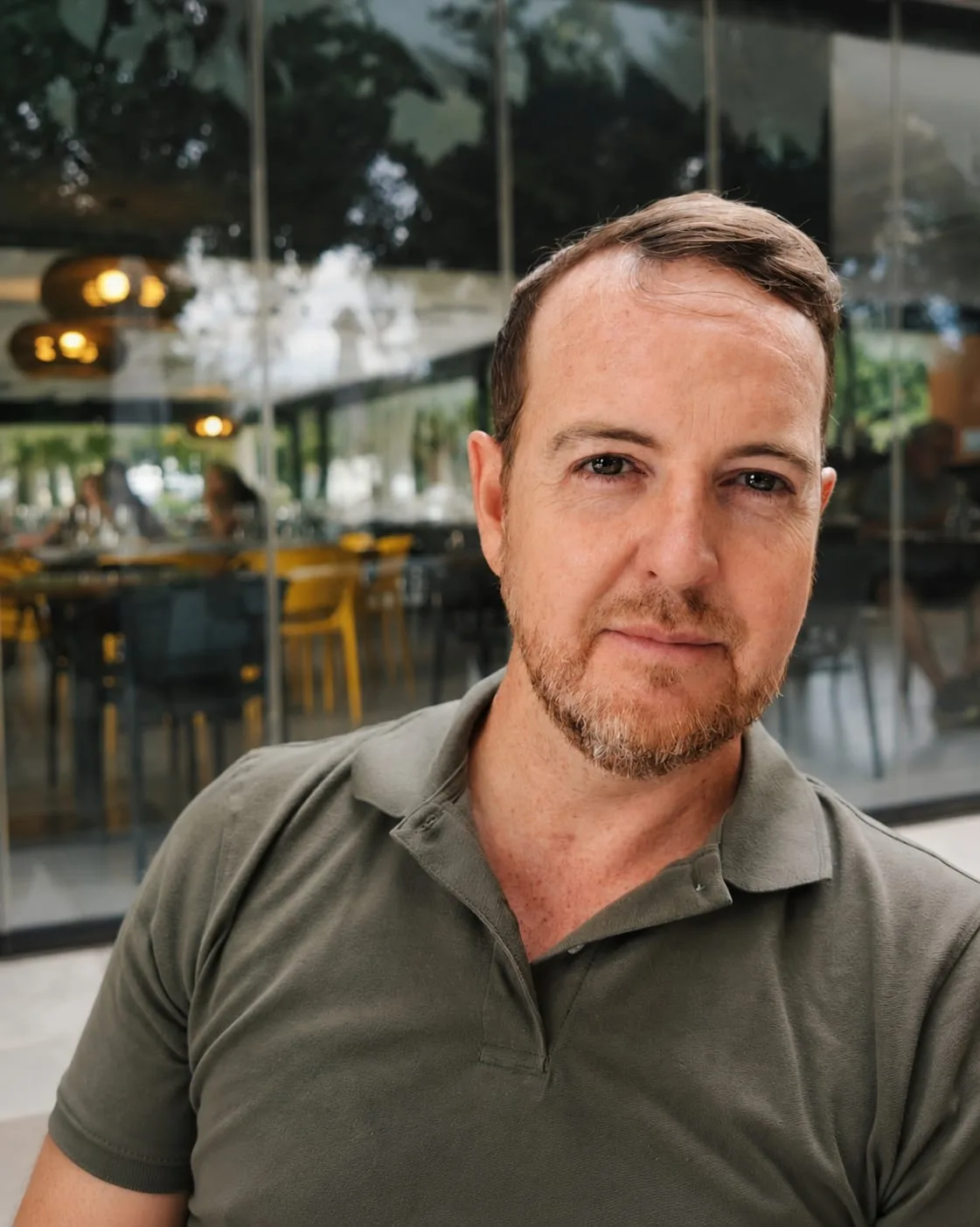
💬 Direct contact: speak with Ignacio before deciding on the format.
❤️ Personal attention: we adapt the route to your group, interests and occasion.
📖❓ Frequently asked questions about María Luisa Park
Is María Luisa Park worth visiting? ▼
Yes. It combines gardens, monuments, fountains, literature and some of the principal architecture of the 1929 Exhibition.
Is the park suitable for children? ▼
Yes. The ducks, pigeons, fountains, Mount Gurugú and open spaces make it one of the best central Seville visits for families.
Can I book a private guided tour? ▼
Yes. We organise private cultural, family, architectural and romantic routes through the park.
Who was Aníbal González? ▼
He was the principal architect of the Ibero-American Exhibition and the great creator of Sevillian regionalist architecture.
Why is he called the Sevillian Gaudí? ▼
It is a popular comparison referring to his creativity and close identification with his city, although his architectural style was very different from Gaudí’s.
Can the park be visited by horse-drawn carriage? ▼
Yes. We can help organise a private carriage route, optionally combined with a cultural guide.
Is it suitable for a marriage proposal? ▼
Yes. Bécquer’s Roundabout, Plaza de España, the Lotus Pond and the Garden of the Lions are particularly attractive settings.
Can you help organise the proposal? ▼
Yes. We can help with the route, timing, carriage, guide and coordination of appropriate complementary services.
Can we organise a wedding-related experience? ▼
Yes. We can study photographic routes, carriage experiences, cultural activities for guests and other private plans, subject to local conditions and permissions.
How long should I allow for the visit? ▼
A focused route may take around two hours. A broader visit including Plaza de España, Plaza de América and the exhibition architecture can require longer.
Where can we eat afterwards? ▼
Calle Felipe II and the surrounding area offer good bars, restaurants and terraces for tapas after the visit.
How can I ask Ignacio for advice? ▼
Write to info@visitarsevilla.com or contact us through WhatsApp, indicating the date, number of visitors and type of experience.
🌴 Discover the stories and hidden corners of María Luisa Park
Explore the gardens with a specialist guide, discover Aníbal González and the architecture of 1929, enjoy a family route or travel through the park by horse-drawn carriage.
We can also help you create a romantic proposal, wedding experience or private surprise in one of Seville’s most beautiful settings.
💬 Ask Ignacio and the team on WhatsApp
✉️ info@visitarsevilla.com
📱 @visitarsevillacom

➡️ Things to do in Seville with children
➡️ Private guided tours in Seville
➡️ Guided tours and cultural experiences in Seville
Content prepared by VisitarSevilla.com, a local cultural tourism project active since 2014. Park access, carriage routes, monument availability, wedding arrangements and special experiences may vary according to the date, weather, permissions and operational conditions.



Leave a comment