
Last updated on June 25th, 2026
🎨✨ Velázquez in Seville — Follow the Footsteps of Spain’s Greatest Painter
📲 Book your private Velázquez Tour in Seville
A private cultural route for art lovers, following Velázquez’s childhood places, artistic training, early works and the Sevillian Golden Age context that shaped one of the greatest painters in history.
✉️ info@visitarsevilla.com
💬 Direct WhatsApp
📱 Instagram of VisitarSevilla.com

💡 Our philosophy: Velázquez cannot be understood only through the Prado Museum. To understand his genius, we must return to Seville: the city where he learned to observe light, silence, humble interiors, ordinary people and the dignity of everyday life.
🌟 Why Velázquez in Seville matters
🎨 The Sevillian origins of a universal genius
🏛️ Born in Seville
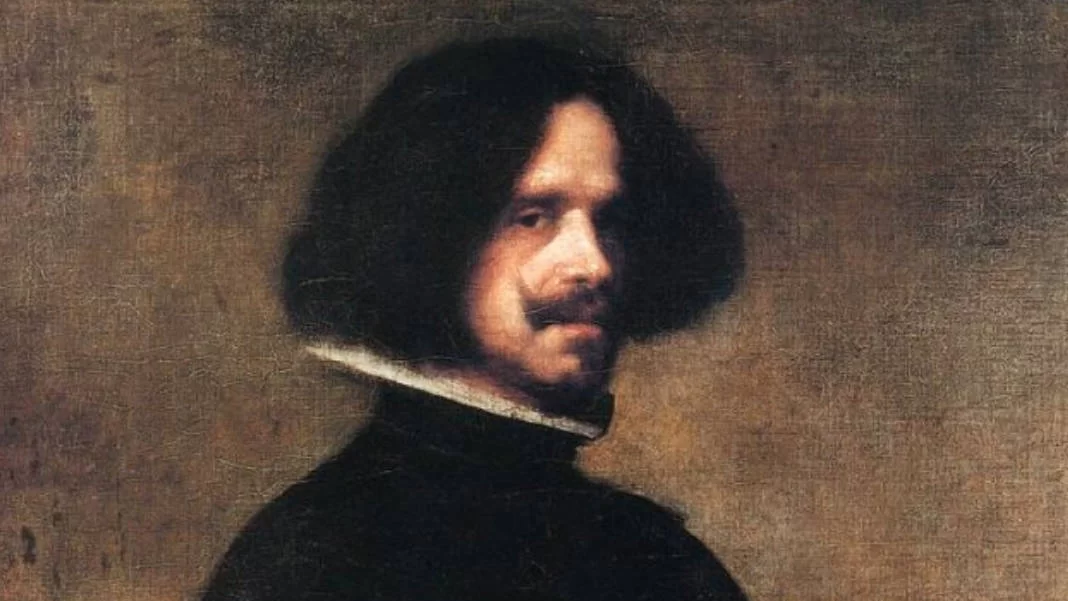
Diego Rodríguez de Silva y Velázquez was born in Seville and lived in the city until the age of 24. These were decisive years. Here he learned his craft, entered the workshop of Francisco Pacheco, married Juana, his master’s daughter, and saw the birth of his daughters Francisca and Ignacia.
Seville at that time was one of Europe’s great cities: wealthy, populous, connected with the trade of the Americas and full of churches, convents, workshops, merchants, sailors, artists and religious commissions.
❤️ My insight: What fascinates me most is imagining the young Velázquez in this city: not yet the painter of kings, but an apprentice observing faces, hands, fabrics, shadows, kitchens, taverns and ordinary people with an intensity that would change painting forever.

🖼️ The young Velázquez and his Sevillian masterpieces
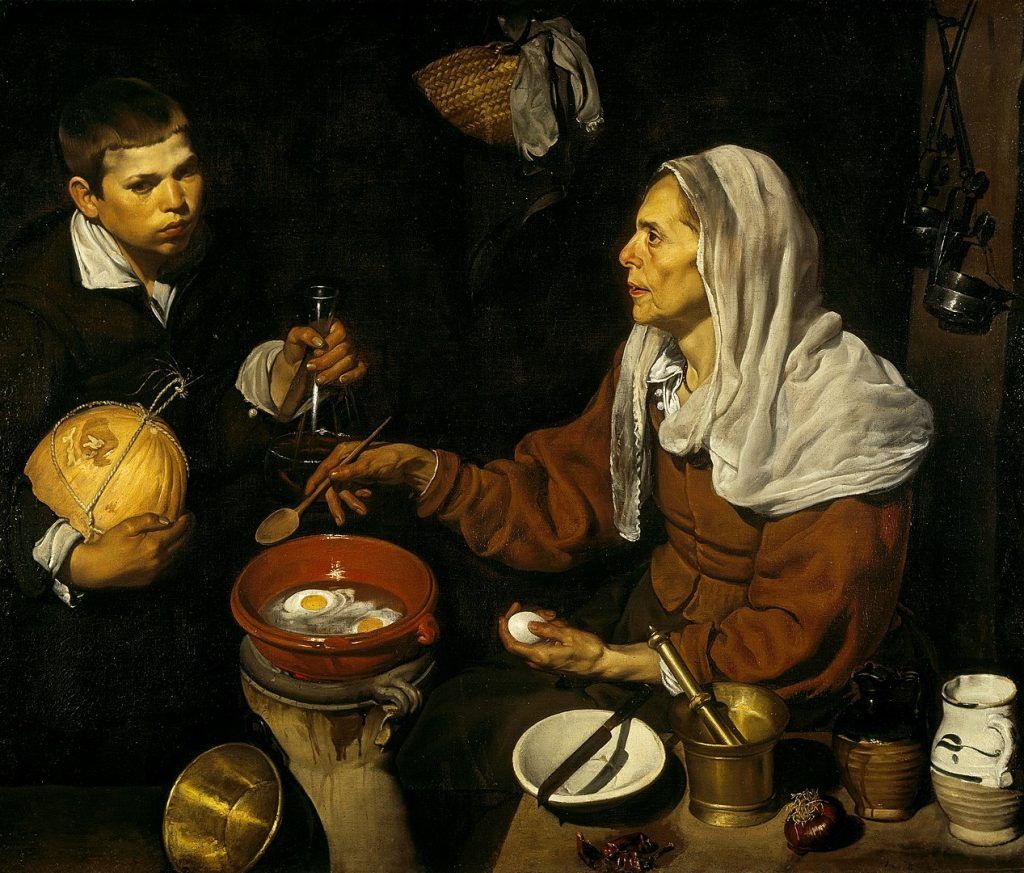
Some of Velázquez’s most admired early works belong to his Sevillian period. Paintings such as Old Woman Frying Eggs and The Water Seller of Seville are not merely scenes of daily life. They are revolutionary paintings.
In them, humble figures are treated with extraordinary dignity. Objects, hands, faces, ceramics, eggs, jugs and shadows become worthy of the highest art. Velázquez turns ordinary life into something monumental.

🎨 Key idea: Before Velázquez painted kings, dwarfs, philosophers and mythological scenes, he learned in Seville to look seriously at ordinary people. That lesson never left him.
📍 Sites related to Velázquez in Seville
⛪ Church of San Pedro: where Velázquez was baptised on June 6, 1599.
🏠 Birth House: located at 4 Padre Luis María Llop Street, near San Pedro.
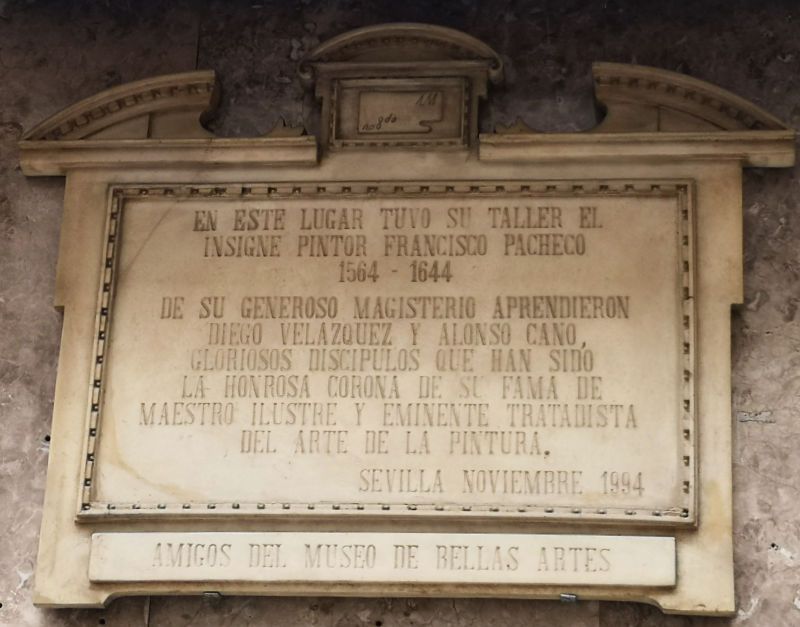
🖌️ Francisco Pacheco’s workshop: linked to Trajano Street, where the young painter began his artistic path.
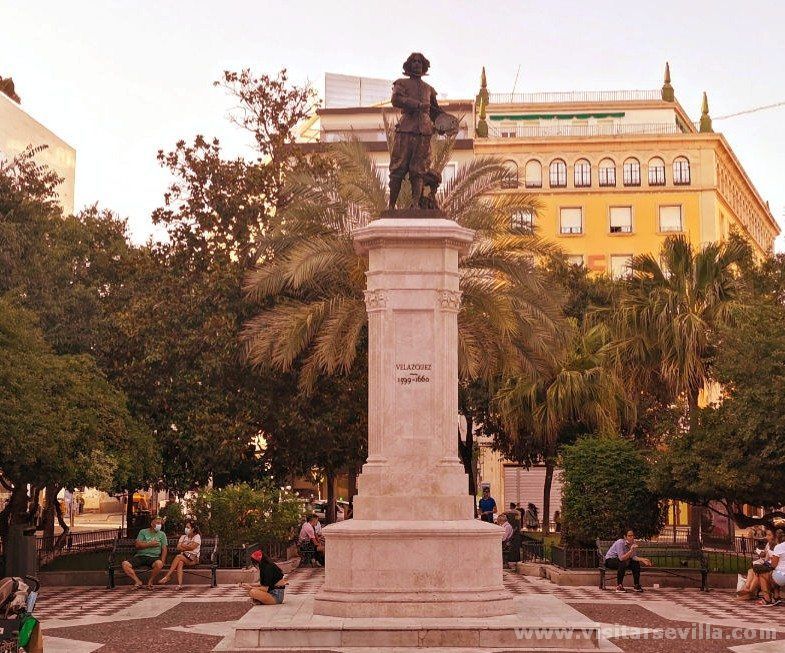
🗿 Plaza del Duque: where a bronze statue by Antonio Susillo remembers the artist.
🏛️ City Hall: where a portrait of the painter can be found in the Dining Hall.
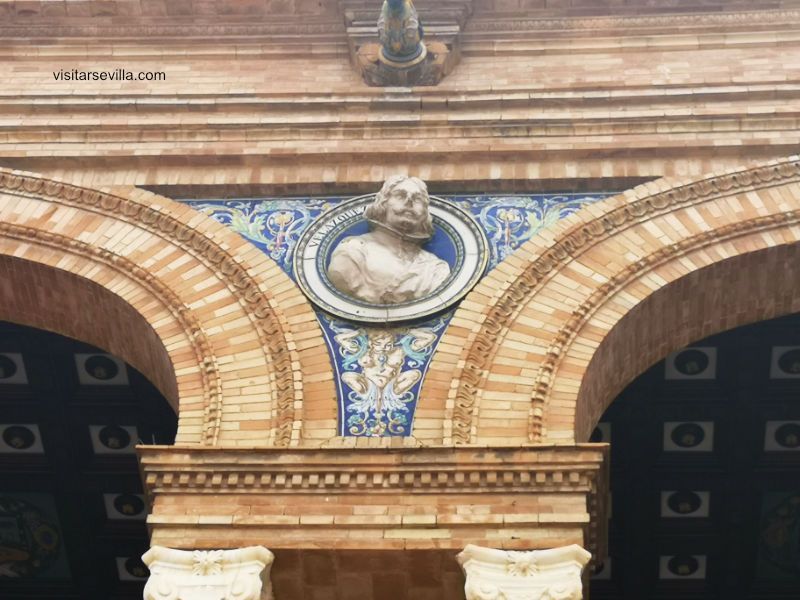
🌍 Plaza de España: where Velázquez appears in a medallion above the benches of the provinces of Madrid and Málaga.

The exact day of Velázquez’s birth is unknown, although many theories suggest that he was born the day before his baptism. His parents, Jerónima Velázquez and Juan Rodríguez de Silva, were married in the Church of San Pedro, and Diego was the eldest of eight siblings.
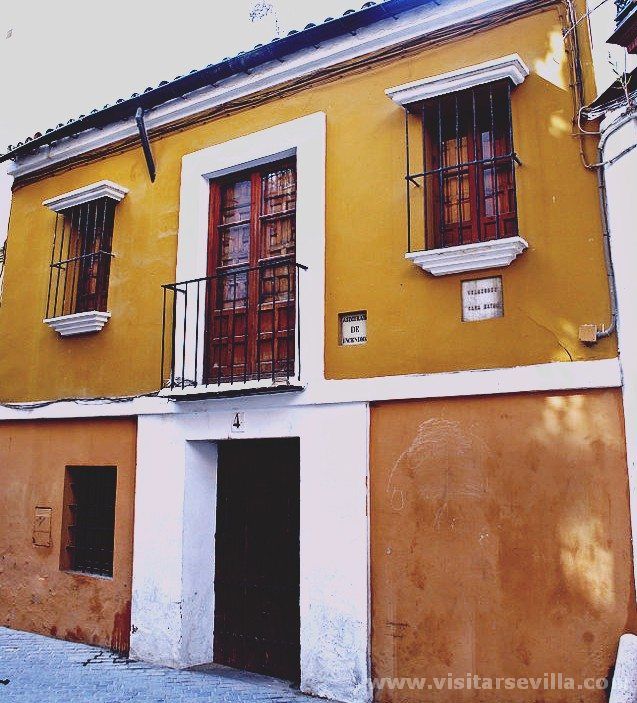
The Birth House of Velázquez, located nearby at Padre Luis María Llop Street, is an Andalusian house with two patios and two floors. Although altered over time, it still preserves the proportions of a sixteenth-century Sevillian house.
🖼️ Paintings by Velázquez in Seville
Velázquez’s physical presence in his native city is unfortunately modest. Most of his Sevillian works are today preserved in museums outside Seville. Even so, the city still keeps important works, memories and traces linked to the painter.
🎨 Velázquez at the Museum of Fine Arts
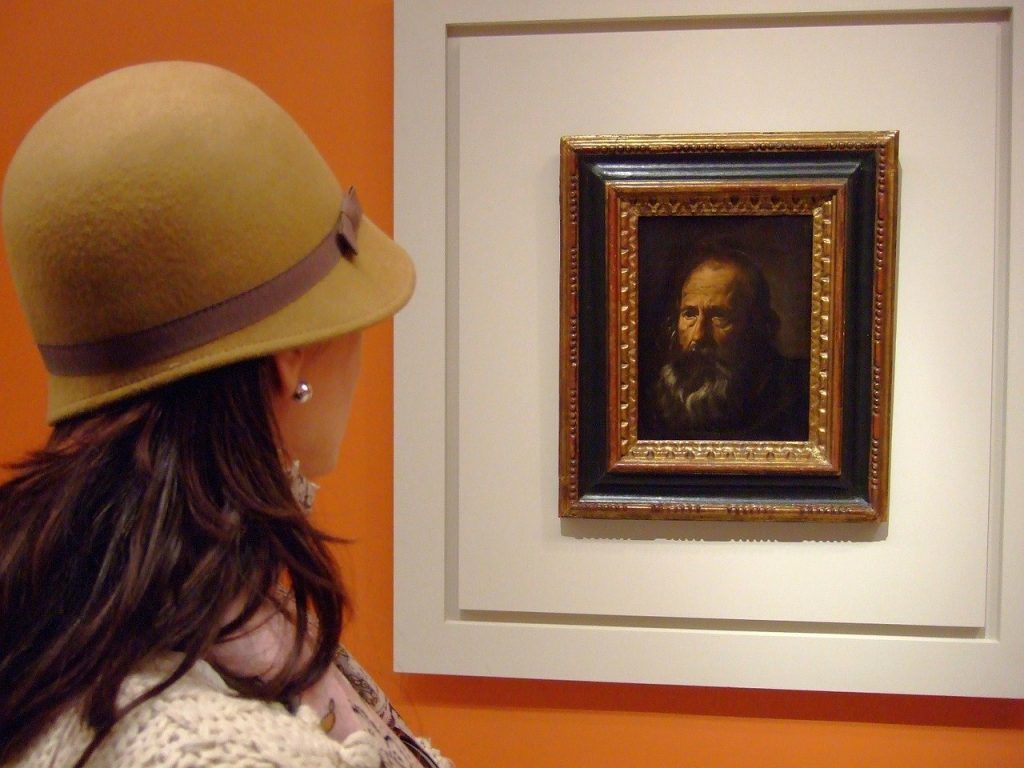
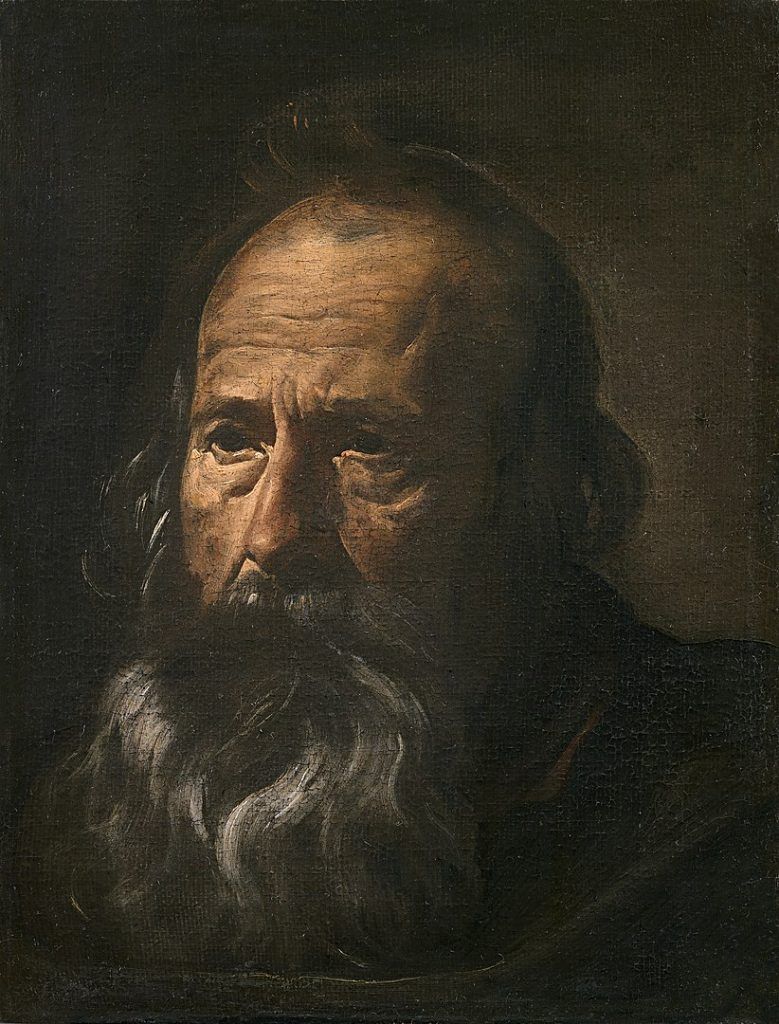
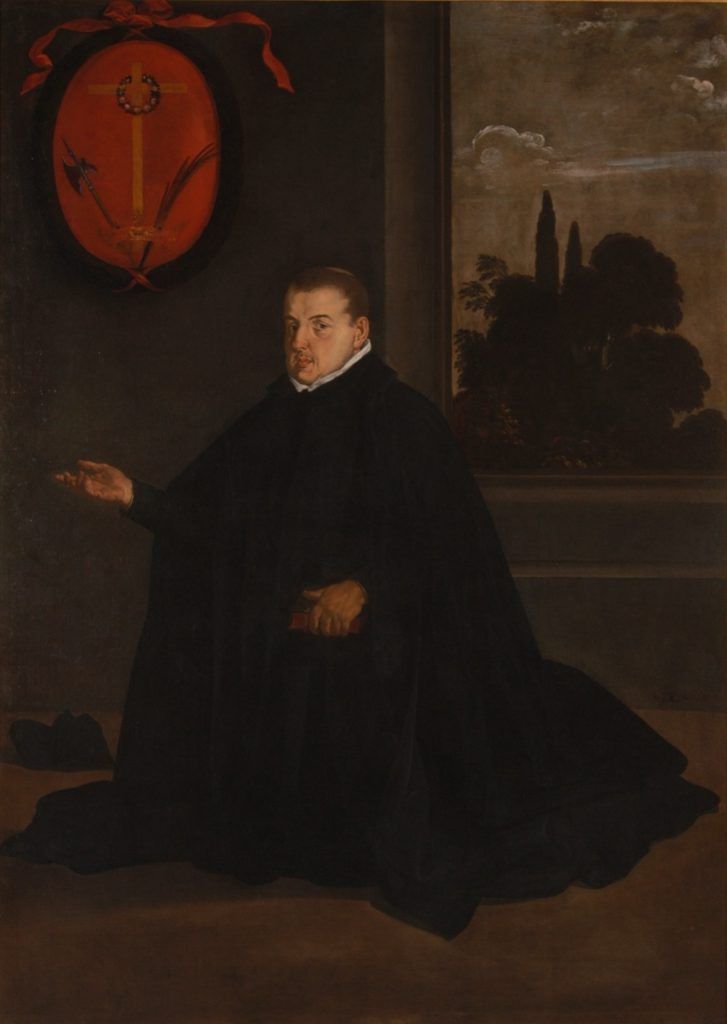
In Seville’s Museum of Fine Arts you can find works connected with Velázquez, including a Head of an Apostle on loan from the Prado Museum and the Portrait of Cristóbal Suárez de Ribera.
✨ The Velázquez masterpieces of the Focus Loyola Collection
Several of the most important paintings by Diego Velázquez connected with Seville belong to the Focus Loyola Foundation Collection. Following the restoration of the historic Church of San Hermenegildo, beside Plaza de la Gavidia, these masterpieces are expected to become accessible once again in a permanent exhibition space, representing one of the most exciting cultural developments in Seville.
Saint Rufina, painted around 1629–1632, reflects Velázquez’s Sevillian artistic roots even after his move to the Spanish Court. After passing through several distinguished private collections, the painting was recovered for Seville by the Foundation in 2007 and is considered one of the city’s greatest artistic treasures.

The Immaculate Conception, painted in 1617, is one of Velázquez’s earliest surviving masterpieces, created during his apprenticeship in the workshop of Francisco Pacheco. It already reveals the extraordinary realism and technical brilliance that would define his career.

The Bestowal of the Chasuble on Saint Ildefonsus, originally painted for the Convent of San Antonio Abad and later preserved in the Archbishop’s Palace, demonstrates the young Velázquez’s admiration for artists such as El Greco and Luis Tristán, while already anticipating the powerful naturalism of his mature style.

Our recommendation: Keep an eye on the reopening of the Church of San Hermenegildo. Once this new cultural venue opens to the public, visitors will once again be able to admire some of the finest works by Velázquez preserved in Seville, just a short walk from the historic centre.
🕯️ Velázquez in the Church of La Magdalena
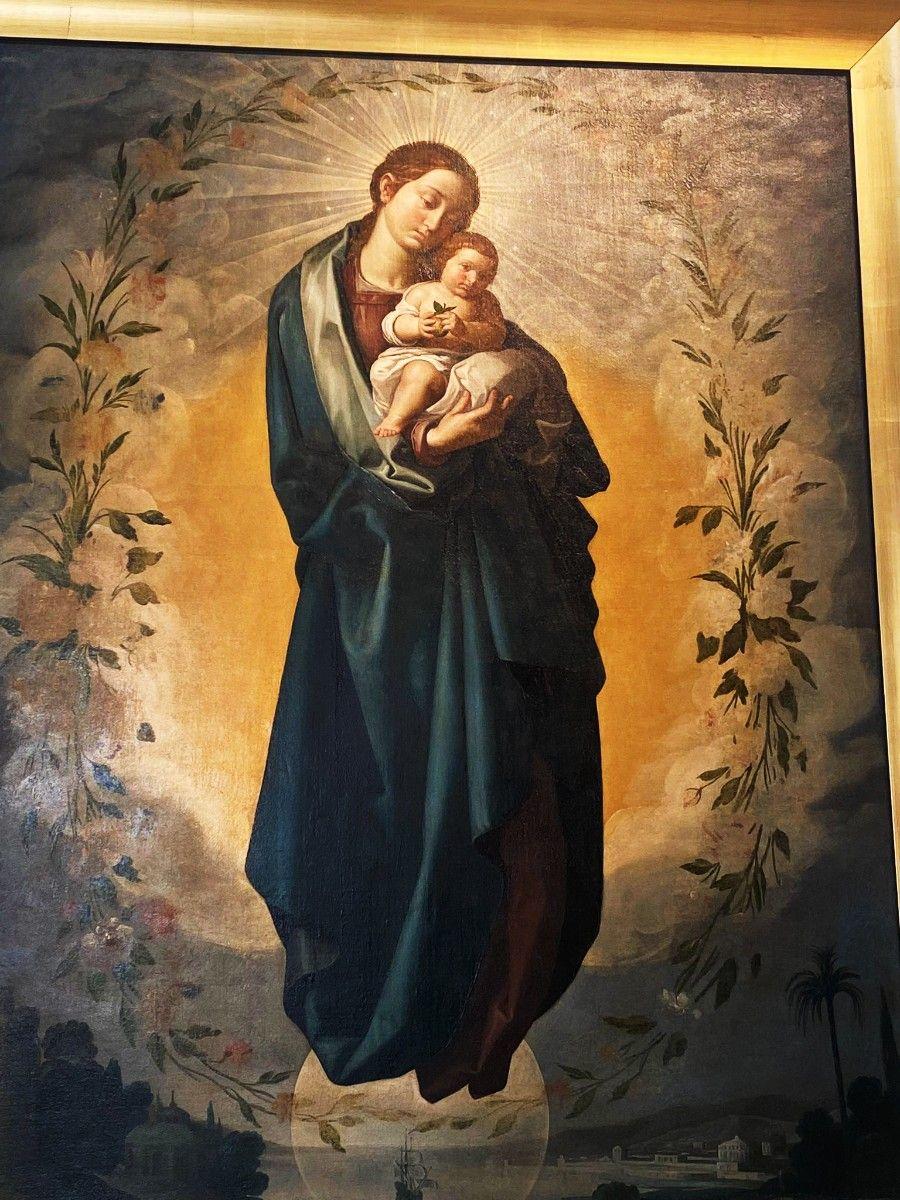
In recent years, a work preserved in the Church of La Magdalena has been proposed as a possible attribution to Velázquez, perhaps from a very early stage, around the age of fifteen, while he was still in Pacheco’s workshop.
There is no expert consensus, but the attribution is fascinating. Scholars have noted stylistic features close to accepted early works by Velázquez, and some even suggest a possible joint work with his master and future father-in-law.
🔎 Detail to observe: As a curiosity, researchers have pointed to the initials “DDV” in the sails of the ship beneath the Virgin, interpreted by some as a possible kind of signature.
🚶 Suggested Velázquez route in Seville
⛪ 1. Church of San Pedro: baptismal place of Velázquez.
🏠 2. Birth House: the Sevillian domestic world of the young painter.
🖌️ 3. Area of Pacheco’s workshop: training, artistic theory and family connections.
🗿 4. Plaza del Duque: monument to Velázquez by Antonio Susillo.
🖼️ 5. Museum of Fine Arts: works and artistic context of the Sevillian school.
🌍 6. Optional extensions: La Magdalena, Plaza de España, or a broader Golden Age Seville route.
🏆 The importance of Velázquez
Velázquez is one of the most important painters in the history of Western art. His ability to capture light, space, personality and psychological depth changed the course of painting.
His portraits are among the greatest ever painted. His realism is never merely descriptive; it is thoughtful, restrained and profoundly intelligent. With works such as Las Meninas, he transformed the relationship between painter, subject and viewer.
But this universal genius began in Seville. That is what makes this route so moving: it allows us to return to the beginning, to the city where Velázquez first learned how to look.
🫶 Who this route is for
This tour is ideal for art lovers, students, museum visitors, families interested in culture, painters, historians, teachers and travelers who want to go beyond the most obvious monuments of Seville.
🎨 Art lovers: a route focused on one of the greatest painters in history.
🎓 Students and teachers: ideal for educational groups and academic visits.
🏛️ Cultural travelers: a deeper way to understand Golden Age Seville.
👨👩👧 Families: adaptable to younger visitors through storytelling and visual details.
🖼️ Museum visitors: perfect as a complement to the Museum of Fine Arts or the Prado in Madrid.
✅ What’s included
- 🧑🏫 Private guided route with a specialist guide.
- 🎨 Historical and artistic explanation of Velázquez’s Sevillian period.
- ⛪ Exterior and contextual stops related to his life.
- 🖼️ Optional Museum of Fine Arts extension.
- 🗣️ Available in English, Spanish, Italian or French, depending on guide availability.
- 📍 Flexible itinerary adapted to your interests and pace.
❌ Not included
- 🎟️ Museum or monument tickets, if required.
- 🚕 Transport, unless specifically requested.
- 🍽️ Food or drinks.
- 📸 Photographer or video service.
🧾 Practical notes
⏱️ Duration: usually 2 hours; longer versions available.
📍 Suggested meeting point: Church of San Pedro or central Seville.
🗣️ Languages: English, Spanish, Italian and French, depending on availability.
👟 What to wear: comfortable shoes for walking through the historic centre.
🎨 Recommended add-on: Museum of Fine Arts of Seville with an art historian.
⭐ Why do this Velázquez route with VisitarSevilla.com?
🎨 Personal passion: Velázquez is one of the painters who fascinates us most.
📍 Local perspective: we connect the painter with real places in Seville.
🎓 Artistic depth: the route explains his training, early works and historical context.
👥 Private format: adapted to your interests, rhythm and knowledge level.
🏛️ Golden Age Seville: we place Velázquez within the broader artistic and urban world of seventeenth-century Seville.
❤️ Guides with sensitivity: because Velázquez deserves more than dates; he deserves interpretation, emotion and attention.
📖❓ FAQs — Velázquez Tour in Seville
Was Velázquez born in Seville? ▼
Yes. Diego Velázquez was born in Seville in 1599 and was baptised in the Church of San Pedro.
Can we visit Velázquez’s birthplace? ▼
The route includes the exterior and context of the birth house area. Interior access depends on the current situation and opening conditions of the space.
Are there paintings by Velázquez in Seville? ▼
Yes, although his presence in the city is modest compared with his importance. Works connected with Velázquez can be seen in the Museum of Fine Arts and other contexts, depending on loans, exhibitions and access conditions.
Is this tour suitable for art lovers? ▼
Absolutely. It is especially recommended for visitors interested in painting, art history, the Spanish Golden Age and the origins of Velázquez’s genius.
How can I book? ▼
Email us at info@visitarsevilla.com or contact us directly by WhatsApp at +34 646 15 68 14.


Leave a comment