
Last updated on June 26th, 2026
🎭✨ Triana Heritage Walk — Flamenco Roots, Ceramics & Market Flavors
📲 Book your private Triana Heritage Walk in Seville
A 2-hour private walking tour through Triana: flamenco roots, Roma heritage, ceramics, bullfighting memory, river history and the Mercado de Triana. Perfect for families, students and culture lovers.
✉️ info@visitarsevilla.com
💬 Direct WhatsApp
📱 Instagram of VisitarSevilla.com
💡 Our philosophy: Triana is not only a picturesque neighbourhood. It is a cultural world of its own, shaped by river trade, ceramics, flamenco, Roma heritage, popular devotion, bullfighting culture and market life. We guide it with affection, context and respect.
🌟 Why Triana is so special
🎭 The “other side” of Seville
🌉 What you’ll experience
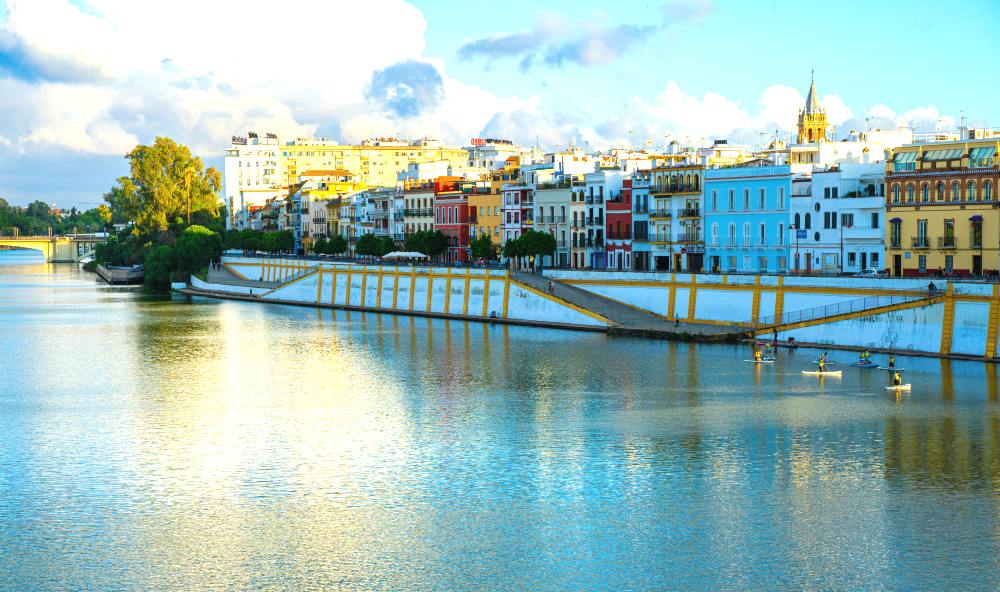
The walk begins by crossing the Triana Bridge, one of the great symbolic entrances to the neighbourhood. From here, you immediately feel that Triana is not simply another area of Seville; it is a district with its own pride, humour, memory and way of life.
We introduce the history of the river, trade, sailors, artisans and popular classes that shaped the neighbourhood. Triana has always been close to Seville and yet somehow independent from it.
❤️ My insight: Triana must be walked with patience. If you rush, you see bars, tiles and souvenir shops. If you look carefully, you begin to see a whole universe of memory, work, devotion and art.
The route continues through emblematic streets where we speak about flamenco, the Roma legacy, ceramics, bullfighting, popular devotion and the social realities that helped create Triana’s powerful identity.
✨ Highlights at a glance
🎶 Flamenco origins: palos, rhythms, cante jondo and the expressive soul of Andalusian music.
🧭 Roma heritage: Triana’s role in shaping Andalusian culture and popular identity.
🐂 Bullfighting references: matadors, taverns, local memory and the taurine atmosphere of Seville.
🏺 Triana ceramics: kilns, glazes, azulejos, workshops and timeless patterns.
🛍️ Mercado de Triana: free time to sip, taste and mingle with locals at the end of the tour.
🎶 Flamenco roots and Roma heritage
Triana is one of the great names in the history of flamenco. Its streets, families, patios and taverns are linked to cante, rhythm, dance and the powerful emotional language of Andalusian folklore.
During the walk, we explain how the Roma community and the social history of the neighbourhood helped shape forms of expression that later became identified with Andalusia worldwide.
Flamenco is not treated as a show here, but as a cultural language born from communities, hardship, celebration, memory and identity.
🎶 Cultural key: To understand flamenco, you must understand places like Triana: neighbourhoods where art was not separated from daily life.
🏺 Triana ceramics: clay, fire and colour
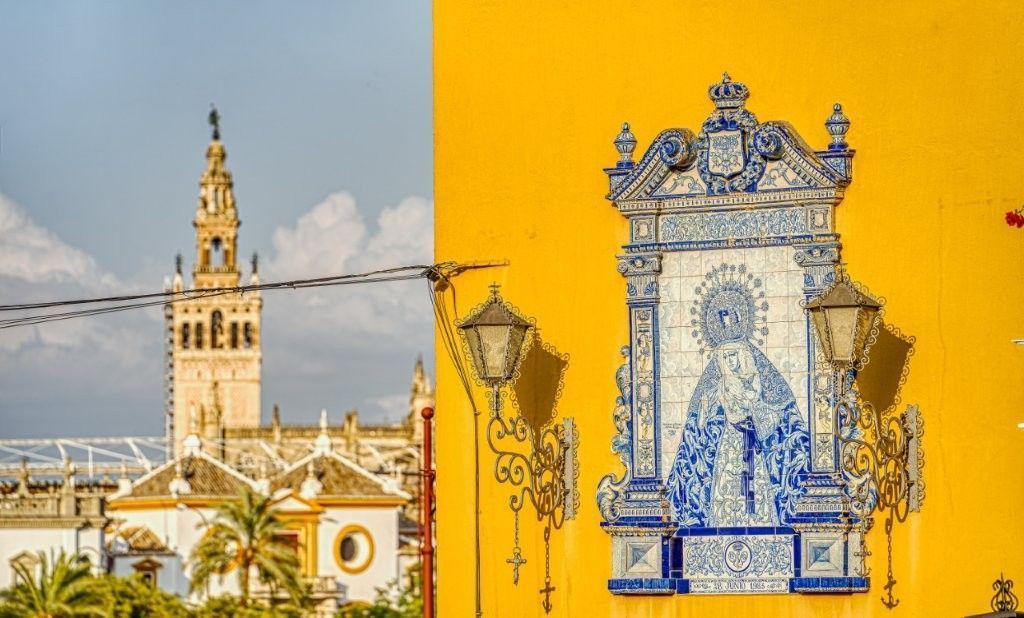
Triana is also a district of ceramics. For centuries, its workshops and kilns produced tiles, domestic pottery, decorative panels and architectural ceramics that shaped the visual identity of Seville.
On the route, we look at façades, former kilns, artisan shops and traditional motifs, explaining clay, pigments, glazes and the importance of ceramic production in the neighbourhood’s economy and culture.
Ceramics help us read Triana through colour: blue, green, ochre, white, shiny surfaces, religious panels and decorative borders that still mark the streets.
🐂 Bullfighting memory and popular culture
Triana has strong historical links with bullfighting. Many legendary matadors were born or lived in the neighbourhood, and taurine references appear in taverns, stories, local pride and social memory.
We explain this world with cultural context, connecting bullfighting to the wider history of Seville, without forcing admiration or rejection. The goal is to understand why it formed part of Triana’s identity.
🐂 Local feeling: In Triana, bullfighting, flamenco, devotion and tavern life have often shared the same social spaces. That mixture is part of the neighbourhood’s character.
🍊 Mercado de Triana: flavours at your own pace
The route ends at the Mercado de Triana, one of the best places to feel the everyday rhythm of the neighbourhood.
Your guide will give you tips and recommendations, and then you can enjoy free time to taste what you like: Iberian ham, olives, cheeses, fried fish, sweet treats, wine or local tapas.
This final stop allows the tour to end in a relaxed and delicious way, surrounded by market life.
🗺️ Route overview — 2-hour suggested timetable
⏱️ 10:00–10:20 — Puente de Triana & Plaza del Altozano: meeting point, orientation to Triana’s history, river trade and the “other side” of Seville.
⏱️ 10:20–10:55 — Flamenco streets & Roma legacy: emblematic lanes, social history and the roots of flamenco expression.
⏱️ 10:55–11:25 — Ceramics district: azulejo façades, former kilns, artisan shops, clay, pigments and Triana motifs.
⏱️ 11:25–12:00 — Mercado de Triana: final explanations and free time to taste Andalusian gastronomy at your own pace.
🫶 Who it’s for
This route is perfect for travellers who want to understand Triana beyond clichés and discover its real mixture of art, craft, devotion, folklore and local life.
🎶 Flamenco lovers: discover the neighbourhood context behind the art.
🏺 Craft lovers: understand Triana ceramics and its visual tradition.
🎓 Students and cultural travellers: ideal for social history, folklore and identity.
👨👩👧 Families: easy walking route with colourful stories and market ending.
🍷 Food lovers: finish in the market with free time to taste local flavours.
✅ What’s included
- 🧑🏫 Expert local guide.
- 🚶 Curated 2-hour route through Triana’s historic core.
- 🎶 Cultural insights on flamenco and Roma heritage.
- 🏺 Explanation of Triana ceramics and former kilns.
- 🐂 Bullfighting references and historical context.
- 🛍️ Final orientation at Mercado de Triana.
- 🗣️ English-speaking guide, with other languages depending on availability.
❌ Not included
- 🍷 Food and drinks at the market.
- 🎟️ Museum or workshop entry fees, if optional stops are added.
- 🚕 Transport.
- 📸 Photographer or video service.
🧾 Practical notes
🕑 Duration: 2 hours.
📍 Meeting point: Plaza del Altozano, Triana Bridge side.
💶 Indicative private tour rate: 150 euros for up to 8 people.
👟 Pace: easy walking; comfortable shoes recommended.
🌞 Weather: shade stops when possible; bring water in summer.
♿ Accessibility: mostly step-free; tell us any specific needs in advance.
🎁 Optional add-ons
- 💃 Mini flamenco demonstration or class.
- 🏺 Hands-on ceramics workshop or showroom visit.
- 📸 Private photo stop with azulejo backdrops.
- 🍷 Tapas or market tasting arrangement.
- ⛪ Devotional Triana extension.
- 🐂 Bullfighting culture extension.
🟠 Small group alternative
As an alternative to a private tour, you can also join a small group walking tour in Triana.
🟠👣 Small group Triana walking tour — a practical option if you prefer a shared experience.
⭐ Why do this Triana walk with VisitarSevilla.com?
📍 Local perspective: we explain Triana as a living neighbourhood, not just a tourist postcard.
❤️ Personal connection: we love Triana and its mixture of devotion, art, folklore and gastronomy.
🎓 Cultural depth: flamenco, Roma heritage, ceramics, bullfighting and market life are explained together.
👥 Private format: adaptable rhythm for families, students and culture lovers.
🍊 Market ending: finish with the flavours and everyday life of Mercado de Triana.
🌟 Good guides matter: only with context can you truly understand Triana’s soul.
📖❓ FAQs — Triana Heritage Walk in Seville
How long does the Triana tour last? ▼
The standard private walk lasts around 2 hours.
Is food included at the market? ▼
No. The tour ends at Mercado de Triana with free time to buy and taste what you prefer.
Can we add a ceramics workshop? ▼
Yes. A ceramics workshop, showroom visit or specialised ceramics extension can be arranged on request, depending on availability.
Is this tour suitable for families? ▼
Yes. It is an easy walking route and can be adapted for families, students and mixed-age groups.
How can I book? ▼
Email us at info@visitarsevilla.com or contact us directly by WhatsApp at +34 646 15 68 14.


Leave a comment