

Last updated on July 30th, 2026
🏛️ The Palace of the Countess of Lebrija in Seville: Roman Mosaics, Art and Private Tours

🏛️ Private tours of Seville’s palaces and Roman heritage:
✉️ Email
💬 Contact me

🏺 How to visit the Palace of the Countess of Lebrija – Ignacio’s recommendations
👋 My recommendation is to view this palace as both a historic residence and an archaeological museum. The authentic Roman mosaics are the great stars of the visit, but the architecture, furniture, paintings and story of the Countess are also essential.
🎟️ Do not miss the upper floor. The ground floor contains the most important archaeological collection, but the upper floor reveals the private rooms of the family, period furniture, paintings and objects from different parts of the world.
🔐 Private palace and archaeology tour:
💬 Contact me
🏛️ We can include the Palace of the Countess of Lebrija in a private route through Seville’s palatial houses, or combine it with Roman Seville, the Antiquarium or the archaeological site of Itálica.
🍷 After the visit, continue towards Calle Sierpes, Plaza del Salvador or Plaza de la Encarnación. The surrounding streets contain restaurants, tapas bars, shops and traditional flamenco venues.
❤️ If you enjoy Roman archaeology, authentic mosaics and historic interiors, this is one of the most distinctive visits in central Seville.
📍 Palace of the Countess of Lebrija: key information
🌟 Why visit the Palace of the Countess of Lebrija?
The Palace of the Countess of Lebrija is a magnificent palace museum located at number 8 Calle Cuna, a busy shopping street running parallel to the famous Calle Sierpes.
Its origins date back to the sixteenth century. Over time, it belonged to several Sevillian noble families until it was acquired in 1901 by Regla Manjón Mergelina, Countess of Lebrija.
The Countess was deeply interested in archaeology and transformed the residence to display her valuable collection of antiquities. Roman mosaics, sculptures and architectural pieces became integrated into the floors, walls, courtyards and rooms of the palace.
Her family continued to live here during much of the twentieth century. The building was later converted into a museum house, allowing visitors to discover both the archaeological collection and the private world of an aristocratic Sevillian residence.
❤️ My view: the great attraction of this palace is the dialogue between two worlds. Visitors walk through a genuine Sevillian mansion while constantly encountering Roman mosaics, archaeological remains and objects collected by an extraordinary woman.
🚪 The Renaissance entrance
The entrance façade introduces visitors to the noble character of the building. Its Renaissance doorway is flanked by columns supporting an entablature and a central balcony with a wrought-iron parapet.
The entrance is worked in marble, while the door is made from solid sixteenth-century mahogany. Beyond it, the hallway contains a gilded and polychrome iron grille, a wooden coffered ceiling and a floor made with Roman marble.

From the first moment, the palace reveals one of its most distinctive features: ancient materials are not displayed separately in conventional museum cases but form part of the architecture itself.
🌿 The main courtyard
The main courtyard is one of the most impressive spaces in the palace. It combines Andalusian, Plateresque and Islamic-inspired elements, creating a richly decorated setting of galleries, marble columns, plasterwork and historic tiles.

At its centre is an exceptional Roman mosaic dating from approximately the second or third century. Its decoration includes mythological scenes connected with the loves of Zeus and representations of the seasons.
The surrounding galleries display archaeological remains, some associated with the Roman city of Itálica. Visitors can observe statues, vessels, well curbs, ceramics, glass and pieces from Roman, Islamic and later periods.
The collection reflects the personal taste and archaeological passion of the Countess, who brought together objects of very different origins and periods.
🏺 Roman mosaics: authentic ancient pavements integrated into the palace.
🏛️ Architectural pieces: columns, capitals, marble and other elements reused throughout the building.
🗿 Sculpture: Greco-Roman busts, statues and mythological representations.
🏺 Other cultures: objects from Islamic, Visigothic, Chinese and Persian traditions.
🪜 The main staircase
The magnificent main staircase connects the archaeological ground floor with the historic living rooms above.

It is a characteristic Sevillian staircase with three unequal sections, created using materials from different origins and periods, particularly the sixteenth and seventeenth centuries.
The coffered ceiling is one of its most beautiful features, while the combination of tiles, marble, wood and historic decorative pieces turns the staircase into another exhibition space.

🏺 The ground floor and Roman mosaics
The ground floor contains the principal archaeological collection. In several rooms, the dimensions and layout were adapted to accommodate the large ancient mosaics.
This helps explain why the palace feels so unusual. The mosaics are not small decorative fragments; many cover almost the complete floors of the rooms and determine the way visitors move through the house.
The collection also contains Roman and Visigothic remains, Islamic objects, Greco-Roman busts, stelae, mythological scenes and pieces inspired by Chinese and Persian art.

🏺 An archaeological palace: in terms of the number and quality of its ancient pieces, this historic house is almost a museum. The Roman mosaics are essential for understanding both the collection and the unusual design of its rooms.
Some of the archaeological remains are traditionally linked with the extraction and dispersal of pieces from Itálica during a period when the protection of archaeological sites was very different from today.
This historical context should be explained carefully. The collection preserves important pieces in Seville, but it also invites reflection on the evolution of archaeological practice, collecting and heritage protection.
🎨 Paintings and decorative arts
The palace is not devoted exclusively to archaeology. It also houses paintings, furniture, ceramics and decorative objects collected from different parts of Europe and the wider world.
Works and artistic pieces associated with names such as Van Dyck, Bruegel, the school of Murillo and Joaquín Sorolla form part of the traditional presentation of the collection.

Portrait of Regla Manjón, Countess of Lebrija, by Joaquín Sorolla.
Among the furniture are historic desks, cabinets and pieces traditionally known as bargueños. Together with the paintings and personal objects, they reveal the Countess not only as an archaeologist and collector but also as a woman of culture with broad artistic interests.
🛋️ The upper floor
The upper floor was formerly occupied by the private rooms of the family. Its atmosphere is therefore very different from the archaeological spaces below.
The rooms are decorated with period furniture, paintings, textiles and objects brought from different parts of the world. Personal belongings of the Countess and her husband help visitors imagine the daily life of the family.

🎟️ My advice: do not leave after visiting only the ground floor. The upper level represents a substantial part of the experience and allows you to understand the palace as a family residence, not simply as an archaeological collection.
Access to this part of the palace may be organised through scheduled guided visits. Conditions, times and available rooms can vary, so it is advisable to check the current arrangements when planning your visit.
👩 Who was the Countess of Lebrija?
Regla Manjón Mergelina, Countess of Lebrija, was one of the most interesting female collectors associated with the cultural history of Seville.
Her enthusiasm for archaeology led her to acquire, preserve and study numerous ancient objects. She also adapted her home to display the mosaics and architectural pieces, transforming a noble residence into a highly personal museum.
Her portrait by Joaquín Sorolla has become one of the best-known images associated with the palace. The building itself is also a portrait of her interests: classical antiquity, Sevillian history, travel, collecting and the decorative arts.
👩🏫 Why visit with a specialist guide?
The palace can be admired simply for its beauty, but a specialist explanation gives much greater meaning to the visit.
🏺 Understand the mosaics: identify mythological scenes, decorative patterns and their possible origins.
🏛️ Read the building: distinguish the original palace from later transformations made for the collection.
👩 Discover the Countess: understand her personality, interests and importance as a collector.
🎨 Recognise the artworks: explore the paintings, furniture and decorative arts alongside the archaeology.
⚖️ Discuss archaeological collecting: consider the historical context in which pieces from Itálica and other sites entered private collections.
🏙️ Connect it with Seville: combine the palace with Roman, Renaissance or aristocratic heritage elsewhere in the city.
🏛️ Would you like a private palace tour?
Tell us your date, number of visitors, preferred language and whether you would like to focus on archaeology, palatial architecture or a broader route through Seville.
🗺️ What to visit nearby
The Palace of the Countess of Lebrija is located in one of the most convenient parts of central Seville and can easily be combined with other monuments and experiences.
⛪ Plaza del Salvador
The monumental Church of the Divine Saviour and its lively square are only a short walk away. The area is popular for tapas and social life.
🍄 Plaza de la Encarnación
The Antiquarium beneath the Metropol Parasol preserves remains from Roman and Islamic Seville, making it a natural continuation for visitors interested in archaeology.
🛍️ Calle Sierpes
One of Seville’s best-known shopping streets runs very close to the palace and leads towards Plaza de San Francisco and the Cathedral area.
💃 Flamenco and restaurants
Several flamenco venues, traditional restaurants and tapas bars can be found in the surrounding streets. This makes the palace easy to include before lunch, dinner or an evening performance.
🏛️ Casa de Pilatos
Casa de Pilatos is another essential Sevillian palace. Combining both houses provides an excellent introduction to noble architecture, classical collecting and the artistic culture of Seville.
🏺 Itálica
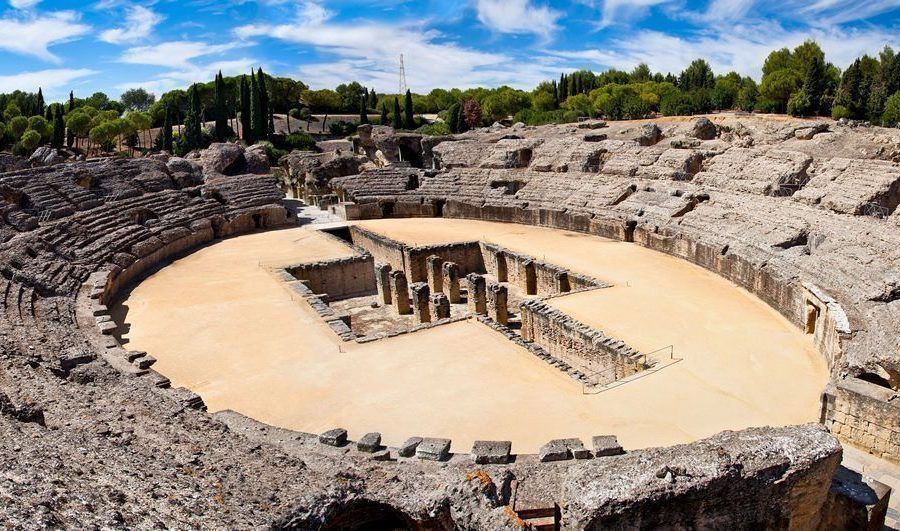
Visitors especially interested in Roman mosaics should consider travelling to the archaeological site of Itálica, located in Santiponce, a short distance from Seville.
🍷 Our recommendation: visit the palace in the morning, continue towards Plaza del Salvador or the Antiquarium and finish with tapas or a flamenco experience in the historic centre.
💡 Tips for visiting
🎟️ Visit both floors: the ground floor focuses on archaeology, while the upper floor reveals the private residence.
🏺 Look down: some of the most important artworks are beneath your feet, incorporated into the floors.
🔍 Observe the details: columns, tiles, ceilings, doors and furniture are as important as the larger rooms.
👩 Remember the collector: the palace reflects the personality and interests of the Countess of Lebrija.
⏰ Check current conditions: opening hours, guided visits to the upper floor and free-entry arrangements may change.
📍 Continue on foot: Calle Sierpes, Plaza del Salvador and Plaza de la Encarnación are all nearby.
⏱️ Suggested private-tour formats
🏛️ Essential Palace of Lebrija
A focused visit to the main courtyard, Roman mosaics, archaeological collection, staircase and principal rooms.
🏺 Roman Seville
Combine the Palace of Lebrija with the Antiquarium and other remains connected with ancient Hispalis.
🏛️ Palatial houses of Seville
A broader private route combining the Palace of the Countess of Lebrija with Casa de Pilatos or another historic residence.
🚌 Palace of Lebrija and Itálica
An archaeological experience connecting the Roman mosaics preserved in the palace with the ancient city from which several pieces are traditionally said to have originated.
🎨 Women, art and collecting
A cultural visit centred on Regla Manjón, her collection, the adaptation of the palace and the role of women in the preservation and interpretation of heritage.
⭐ Why organise your visit with VisitarSevilla.com?
📍 Local knowledge: we place the palace within the wider history and cultural life of Seville.
🏺 Archaeological perspective: understand the mosaics, ancient objects and their historical context.
🏛️ Palace specialists: discover the architecture, furniture and aristocratic uses of the building.
👩 Human story: special attention to the personality and collecting work of the Countess.
🗺️ Flexible routes: combine the palace with Itálica, the Antiquarium or other historic houses.
💬 Direct contact: speak with Ignacio before deciding on the best format.
❤️ Personal planning: we create a coherent cultural experience adapted to your interests.
📖❓ Frequently asked questions about the Palace of the Countess of Lebrija
Is the Palace of the Countess of Lebrija worth visiting? ▼
Yes. It combines a historic Sevillian residence with an exceptional collection of authentic Roman mosaics, sculpture, furniture and paintings.
Why is it called the best-paved palace in Europe? ▼
The expression refers to the extraordinary number and quality of ancient mosaics incorporated into its floors and architectural spaces.
Are the mosaics authentic? ▼
Yes. The palace contains authentic ancient mosaics, many traditionally associated with Roman archaeological sites such as Itálica.
Who was the Countess of Lebrija? ▼
Regla Manjón Mergelina was a Sevillian aristocrat, collector and archaeology enthusiast who acquired and transformed the palace during the early twentieth century.
Should I visit the upper floor? ▼
Yes. The upper floor contains the historic family rooms, paintings, furniture and personal objects and represents an essential part of the complete experience.
Can I visit the palace with a private guide? ▼
Yes. We organise private cultural routes focused on palatial architecture, Roman archaeology and historic collecting in Seville.
Can it be combined with Itálica? ▼
Yes. Combining both places provides a fascinating introduction to Roman mosaics, archaeological collecting and the preservation of the heritage of ancient Itálica.
What can I visit nearby? ▼
Calle Sierpes, Plaza del Salvador, the Antiquarium, Plaza de la Encarnación and several flamenco venues and restaurants are within easy walking distance.
Where can I check current visiting times? ▼
Opening hours, guided access to the upper floor and free-entry conditions may change. Check the palace’s current information before travelling.
How can I ask Ignacio for advice? ▼
Write to info@visitarsevilla.com or contact us through WhatsApp, indicating your date, number of visitors, language and interests.
🏺 Discover one of Seville’s most extraordinary archaeological palaces
Walk across authentic Roman mosaics, explore an elegant Sevillian courtyard and discover the historic rooms and personal collection of the Countess of Lebrija.
Contact us to organise a private visit or a broader route combining the palace with Roman Seville, Itálica or other historic houses.
💬 Ask Ignacio and the team on WhatsApp
✉️ info@visitarsevilla.com
📱 @visitarsevillacom
➡️ Private guided tours in Seville
➡️ Guided tours and cultural experiences in Seville
Content prepared by VisitarSevilla.com, a local cultural tourism project active since 2014. Opening hours, ticket conditions, guided access to the upper floor and available rooms may vary according to the date and operational conditions of the palace.


Leave a comment