

Last updated on July 29th, 2026
📜🌎 Archive of the Indies in Seville: History, Documents and Private Guided Tours
📲 Book a private tour of the Archive of the Indies
Discover the Archive as a unique monument or include it in a wider route about Seville, Columbus and the gateway to the Americas. Visits can be adapted for families, private groups, companies and cultural organisations.
✉️ info@visitarsevilla.com
💬 Direct WhatsApp
📱 Instagram of VisitarSevilla.com
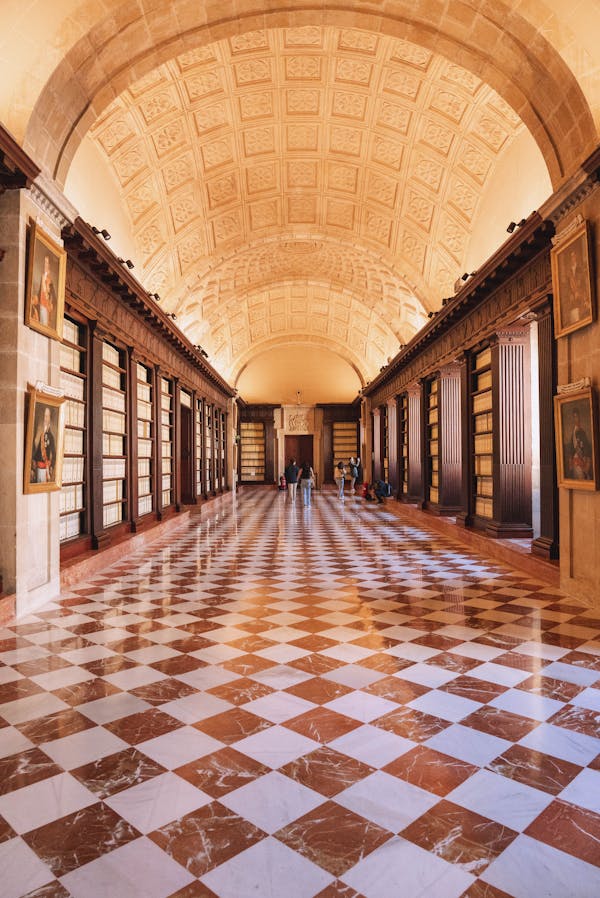
⚠️ Important: the Archive is not a conventional museum with a permanent display of its most famous manuscripts. The experience depends partly on the temporary exhibition available at the time of your visit. A specialist guide helps you understand the building, its historical purpose and the immense collection that is not normally visible to the public.
📍 Key ideas about the Archive of the Indies
🙋♂️🌎 Available guided tour formats
🎯 We offer several ways to discover the Archive of the Indies and the history of Seville’s relationship with the Americas.
💎 Private visit to the Archive of the Indies: a specialist tour focused on the history, architecture and documentary importance of the building.
🌎 Seville, Gateway to the Americas: a broader private route connecting the Archive with the Cathedral, the surroundings of the Alcázar, the Royal Mint, the Torre del Oro and other places linked to Atlantic trade and navigation.
👨👩👧👦 Visits for families and small groups: an accessible and engaging interpretation, adapted to the age and interests of the participants.
🏢 Professional and institutional groups: private visits for companies, universities, associations and cultural organisations.
Visitors looking for a regular group experience in Spanish may also find scheduled guided visits through external booking platforms:
🔴 Check group tour availability in Spanish
📜 What is the Archivo General de Indias?
The Archivo General de Indias is the principal historical archive for studying the Spanish administration in America and the Philippines. It preserves official documentation produced over more than three centuries by the institutions responsible for governing, organising and communicating with the overseas territories.
Today, the Archive is an essential reference for historians, anthropologists, geographers, linguists, genealogists and researchers interested in the history of Spain, the Americas and the Pacific world.
Its collections do not tell a single story. They contain the voices of officials, missionaries, sailors, soldiers, merchants, indigenous communities, enslaved people, settlers, scientists and many other men and women who formed part of an extraordinarily complex historical process.
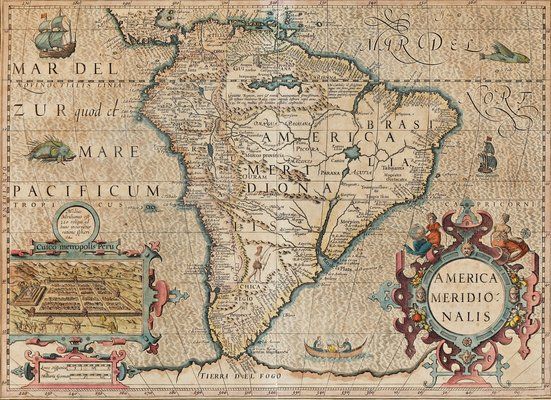
❤️ My insight: what makes the Archive so moving is the contrast between the apparent silence of its rooms and the immense number of human lives contained in its documents. Behind every map, letter or administrative record there is a journey, a conflict, a hope, a decision or a life transformed by history.
🧭 The origins of the building: Seville and the trade with America
During the sixteenth century, merchants involved in trade with America frequently used the steps of the Cathedral of Seville and even the Patio de los Naranjos to carry out their business.
The situation became so intrusive that the Cathedral Chapter installed chains and organised surveillance around the temple in an attempt to prevent commercial activity from taking place inside or immediately beside the religious building.

In 1584, King Philip II decided that a new Merchants’ Exchange should be built beside the Cathedral. The building was intended to provide a dignified and organised space for commercial transactions connected with the Atlantic world.
The architectural design is traditionally associated with Juan de Herrera, the great architect linked to El Escorial, although later architects introduced modifications that shaped the building we see today.
The commercial use of the building eventually declined as Seville lost part of its former trading importance. Over time, the building served different functions, including a tenement house, a consulate and the headquarters of an Academy of Arts founded by Murillo.

👑 The creation of the Archive in 1785
The Archive of the Indies was created in 1785 by order of King Charles III. The aim was to centralise documentation relating to the Spanish administration in America and the Philippines, which had until then been dispersed among archives in Simancas, Madrid, Cádiz and Seville.
The main driving force behind the project was José de Gálvez, Secretary of the Indies. The historian and cosmographer Juan Bautista Muñoz was responsible for organising and developing the new institution.
The creation of the Archive was not merely an administrative decision. It also sought to gather the documentary evidence necessary to study, explain and defend the historical record of Spain’s presence in America in response to hostile or distorted interpretations frequently associated with the so-called Black Legend.

From that moment onwards, documentary collections belonging to the principal institutions responsible for the Indies were gradually transferred to Seville. The Archive eventually became the most important documentary repository for studying the Spanish administration in the New World and the Philippines.
📚 An archive of extraordinary dimensions
The collections of the Archivo General de Indias extend for more than nine linear kilometres and include approximately:
📁 43,000 archival units or bundles
📄 Around 80 million pages
🗺️ Approximately 8,000 maps and drawings
📚 A specialist library with more than 33,500 works
These documents are fundamental for understanding the history and geography of large areas of America and the Philippines, as well as their political, social, commercial, cultural, scientific and religious development.

Original document related to Magellan’s expedition.
🗺️ Columbus, Magellan, Cortés and other historic documents
Among the Archive’s most valuable collections are documents connected with figures such as Christopher Columbus, Ferdinand Magellan, Vasco Núñez de Balboa, Hernán Cortés and Francisco Pizarro.
The Archive also preserves documentation related to the Treaty of Tordesillas, one of the decisive diplomatic agreements in the division of Atlantic spheres of influence between Castile and Portugal.
Some of the oldest surviving documents are linked to Columbus. Particularly significant are the Capitulations of Santa Fe, signed by Christopher Columbus and the Catholic Monarchs before his first voyage across the Atlantic.
These capitulations have been recognised within UNESCO’s documentary heritage programmes. The Archive also preserves other exceptional documentary collections, including records connected with the Japanese embassy that visited Philip III and eighteenth-century vocabularies of indigenous languages.

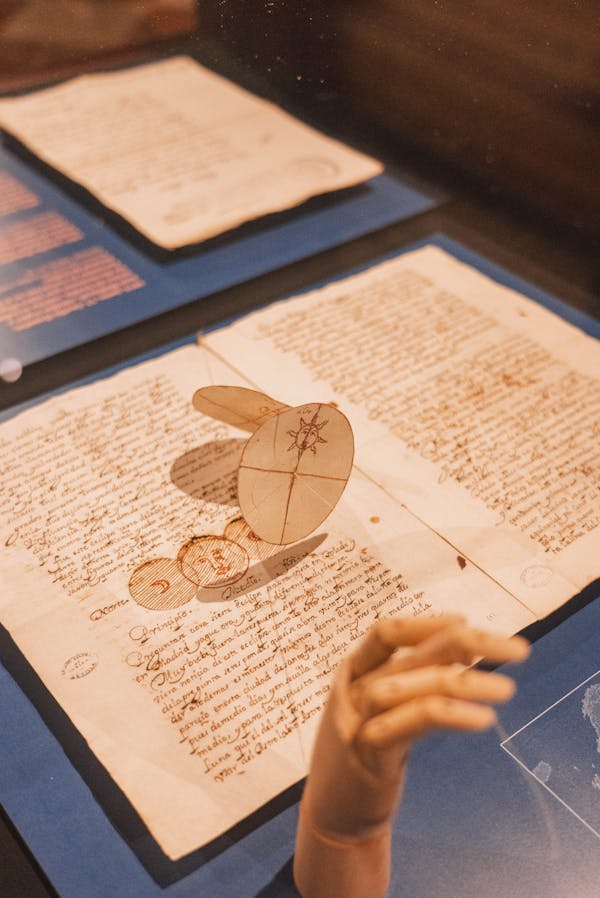
📖 Important: these famous original documents are not normally displayed to visitors. They are preserved in specialised repositories under carefully controlled environmental and conservation conditions. They can occasionally appear in temporary exhibitions.
🔎 A working research centre, not a conventional museum
One of the most important things to understand before visiting is that the Archive of the Indies is not primarily a museum. It is a working historical archive and international research centre.
Researchers from around the world visit Seville every year to consult its collections. The building therefore combines public cultural use with specialised academic and documentary work.
Visitors can normally explore the public areas of the historic building and attend temporary exhibitions, but they should not expect to see the most famous original documents permanently displayed.

🏛️ The architecture of the Archive of the Indies
The former Casa Lonja is a major example of Spanish Renaissance and Herrerian architecture. The building stands on a square podium and has two main floors arranged around a large central courtyard.
Its exterior combines red brick with stone elements, creating a restrained and monumental appearance. The influence of Juan de Herrera is particularly visible on the ground floor, although successive architects modified the initial design.

✋ The Cross of the Oaths
On the side façade opposite the Cathedral stands the Cross of the Oaths. Tradition associates this place with the agreements made by merchants, who confirmed commercial contracts with a handshake.
This small exterior feature helps visitors imagine the intense commercial activity that once surrounded the building and the Cathedral.
🙏 The Triumph Monument
On the rear façade stands the Triumph Monument, a small temple containing an image of the Virgin of Patronage.
It was erected in gratitude for the relatively limited damage suffered by Seville during the devastating Lisbon earthquake of 1 November 1755.
⛲ The entrance garden
The entrance from Avenida de la Constitución is preceded by a small garden and square. At its centre is a fountain decorated with dolphins and guarded by sculpted lions.

🧱 The courtyard and ground-floor galleries
After passing through the entrance lobby and the security control, visitors reach a beautiful square courtyard surrounded by lower and upper galleries.
Two levels of windows allow natural light to enter the galleries, reinforcing the sober geometry and balance of the Renaissance architecture.
The lower gallery contains elegant metal shelving donated in connection with the Ibero-American Exhibition held in Seville in 1929.

🪨 The monumental staircase
One of the architectural highlights of the building is its monumental staircase, dating from 1786.
It is decorated with red, grey and black jasper from Málaga. On the landing appears the coat of arms of Spain, accompanied by the Columns of Hercules and the motto Plus Ultra.
Above the coat of arms appears the name Archivo General de Indias, while a lantern dome provides light and monumentality to the upper part of the staircase.

🖼️ Portraits, explorers and historic figures
The upper vestibule contains a sixteenth-century chest and several portraits of monarchs, explorers, military figures, scientists, writers and administrators connected with the history of the Spanish monarchy and its overseas territories.
Among the represented figures are Queen Isabella II, Alfonso XII, Ferdinand VII, Charles IV, Christopher Columbus, Pedro de Alvarado, Hernán Cortés, Ferdinand Magellan and Juan Sebastián Elcano.
Other important figures include the scientist Antonio de Ulloa, the writer Antonio de Solís and Bartolomé de las Casas, Dominican bishop of Chiapas and one of the best-known voices in debates about the treatment of indigenous peoples.

🗺️ Exhibition rooms and historic objects
The upper vestibule leads through several rooms to the upper gallery, which was once used as a researchers’ room and now serves as an exhibition area.
The gallery is decorated with shelving separated by pilasters and covered by elegant vaults. Depending on the exhibition, visitors may find audiovisual material about the building, historic maps, models and objects related to navigation and the history of the Americas.
Among the objects traditionally displayed are a cannon from the galleon Nuestra Señora de Atocha, a scale model of the Archive and a collection of old maps.
The walls also contain a collection of portraits of Captains General of Cuba from the eighteenth and nineteenth centuries.

Other display cases contain pieces from the Duke of Montpensier’s collection of indigenous American art and Japanese ceramics.
A nearby room preserves objects associated with the nineteenth-century Mexican emperors Agustín de Iturbide and Maximilian, as well as paintings connected with the conquest of Mexico.

🏆 UNESCO World Heritage in the heart of Seville
In 1987, the Archive of the Indies was declared a UNESCO World Heritage Site together with the Cathedral, the Giralda and the Royal Alcázar.
These three monuments form one of the most important monumental ensembles in Europe. Within a very small area, visitors can explore the religious, royal, commercial and administrative history of Seville.
The Archive is located beside the Cathedral and the Alcázar, close to Plaza del Triunfo and Avenida de la Constitución. Its location makes it ideal for a wider private route through Seville’s World Heritage area.

💡 Ignacio’s recommendation: combine the Archive of the Indies with the Cathedral, the Royal Alcázar, the Royal Mint or the Torre del Oro. Together, these sites help explain how Seville became one of the great cities of the early modern world.
💙 Why the Archive matters today
The Archive of the Indies is not only a monument to the past. It remains an essential place for understanding many of the debates that continue to shape relations between Spain, Europe, Latin America and the Philippines.
Its documents make it possible to study conquest and diplomacy, navigation and science, evangelisation and resistance, trade and exploitation, indigenous societies and cultural exchange.
A serious visit should neither idealise nor simplify this history. The value of the Archive lies precisely in its capacity to preserve the documentary evidence needed to examine the past with greater complexity, nuance and intellectual honesty.
📜 Memory: the Archive preserves millions of individual stories that would otherwise have disappeared.
🌎 Global history: its records connect Europe, America, Africa and Asia.
🧭 Critical interpretation: the documents allow historians to challenge myths, exaggerations and simplistic narratives.
❤️ Human dimension: behind every official record there are people, communities and lives affected by political decisions.
⭐ Why visit the Archive with VisitarSevilla.com?
📍 Local project active since 2014: extensive experience creating historical and cultural tours in Seville.
🎓 Specialist interpretation: we work with guides capable of explaining the documentary, architectural and international significance of the Archive.
📚 Research-based content: our routes go beyond basic dates and names to explain the wider historical context.
👥 Private and personal: visits are adapted to your interests, pace, professional background and previous knowledge.
🌎 International perspective: ideal for visitors from Europe, Latin America, the United States, the Philippines and other countries connected with this shared history.
❤️ History told with sensitivity: our aim is not merely to list facts, but to create understanding, reflection and a memorable connection with Seville.

📖❓ Frequently asked questions about the Archive of the Indies
What is the Archive of the Indies? ▼
It is the principal historical archive documenting Spain’s administration and presence in the Americas and the Philippines over more than three centuries.
When was it created? ▼
The Archive was created in 1785 by order of King Charles III.
Why was the Archive created? ▼
Its purpose was to centralise documents that were dispersed among Simancas, Madrid, Cádiz and Seville and to create a principal repository for the study of the Spanish territories in America and Asia.
Who organised the new Archive? ▼
José de Gálvez promoted the project, while the historian and cosmographer Juan Bautista Muñoz played a central role in its organisation.
Where is the Archive located? ▼
It is located in the former Casa Lonja, beside Seville Cathedral and the Royal Alcázar, close to Plaza del Triunfo and Avenida de la Constitución.
Is entry free? ▼
Yes. Entry to the public areas and exhibitions is normally free of charge.
Will I see original documents by Columbus or Magellan? ▼
Probably not. The Archive is a working research centre, and its most valuable documents are preserved in specialised repositories. Originals are only occasionally shown in temporary exhibitions.
Why is it worth visiting? ▼
The building is a UNESCO World Heritage Site, the Renaissance architecture is outstanding, and the temporary exhibitions often display maps, manuscripts and historical objects that help explain Seville’s global importance.
Has the building always been an archive? ▼
No. It was originally built as a Merchants’ Exchange and later served as a tenement house, a consulate and the headquarters of an art academy before becoming the Archive.
How large is the collection? ▼
It contains around 43,000 archival units, approximately 80 million pages and nearly 8,000 maps and drawings extending for more than nine linear kilometres.
What are the opening hours? ▼
The traditional schedule is Tuesday to Saturday from 9:30 am to 5:00 pm, and Sundays and public holidays from 10:00 am to 2:00 pm. It is normally closed on Mondays. Opening times may change, so checking the official schedule before visiting is recommended.
Is it accessible for visitors with reduced mobility? ▼
The main building offers adapted access. Visitors who require assistance should confirm current access arrangements with the monument before their visit.
Can I book a private guided tour? ▼
Yes. VisitarSevilla.com organises private and tailored historical routes for families, couples, groups, universities, companies and cultural organisations.
How can I contact VisitarSevilla.com? ▼
🌎 Discover the Archive of the Indies with a specialist guide
The Archivo General de Indias is much more than a beautiful Renaissance building. It is one of the great places of global memory: a space where Seville, America, Europe and Asia remain connected through millions of original documents.
Let us design a private visit adapted to your interests and help you understand the stories hidden behind its silent galleries.
📚 Bibliography and further reading
📖 Jason Zappulla and James Cusick, Spanish Colonial Period: The Archive of the Indies, University of Florida.
📖 Byron Ellsworth Hamann, The Invention of the Colonial Americas: Data, Architecture, and the Archive of the Indies, 1781–1844.
📚 Historical and documentary materials related to the Archivo General de Indias, Seville, its architecture, collections and World Heritage status.
Historical content and visitor information prepared by VisitarSevilla.com, a local cultural tourism project active since 2014. Private routes are designed with specialist guides and adapted to the interests of each group.



Leave a comment